Imagine landing after a 14-hour flight, exhausted and jet-lagged, only to face a chaotic sea of thousands of passengers at Tan Son Nhat’s immigration hall—with no clear path forward for your mobility device. For travelers with mobility challenges, the prospect of navigating bustling international airports in Vietnam can initially feel overwhelming. The endless corridors, the language barrier, and the sheer volume of foot traffic are enough to cause serious pre-travel anxiety.
TL;DR for the traveler on the go: Wheelchair assistance in Vietnam is highly reliable and entirely free, but it requires strict advance notice. You must book at least 48 hours before departure, know your specific international service code (WCHR, WCHS, or WCHC), and double-check airline-specific battery policies if bringing an electric chair.
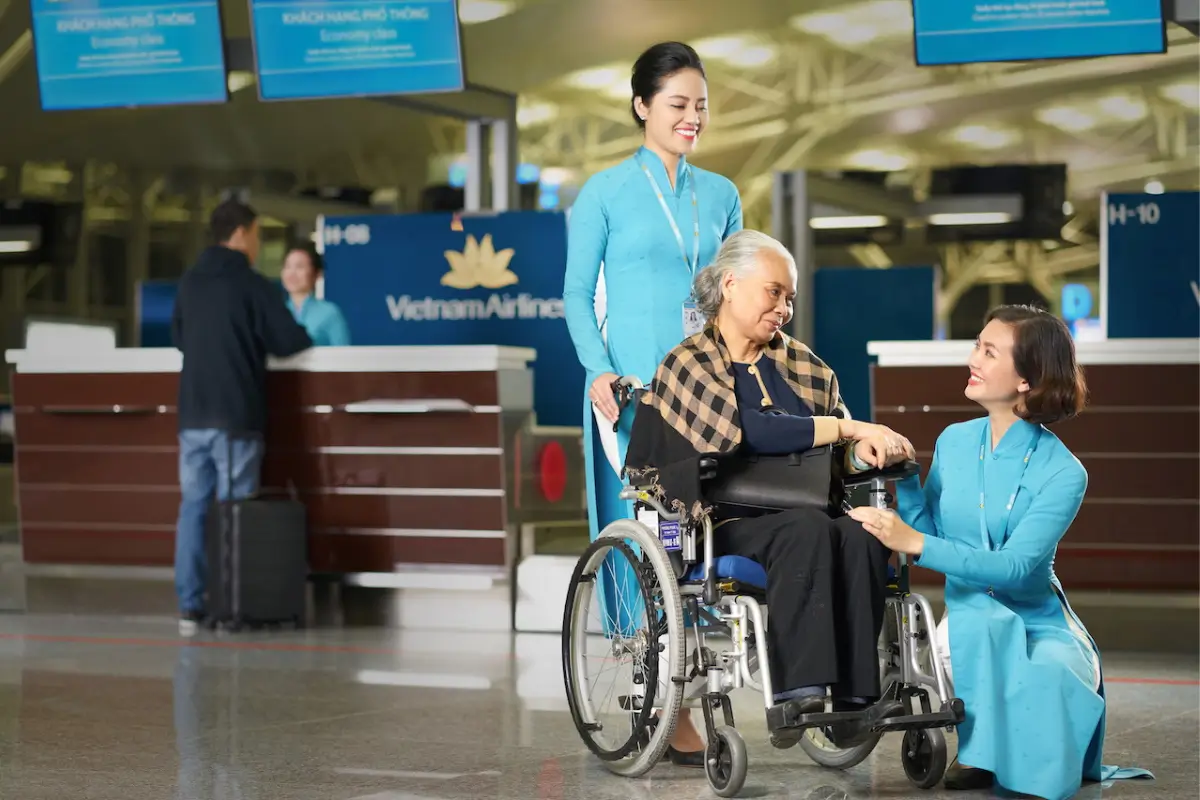
Now, picture a completely different arrival: You step off the plane, and a smiling staff member is already waiting at the aircraft door holding a placard with your name. They guide you into a comfortable wheelchair, whisk you through a dedicated priority immigration lane, collect your baggage, and escort you directly to your waiting car. That seamless, stress-free reality is entirely possible.
As your local concierge, I have guided countless visitors through Vietnam’s aviation hubs. This comprehensive guide breaks down everything you need to know about Vietnam airport wheelchair assistance, from decoding standard international service codes to step-by-step booking procedures and navigating the terminals with absolute ease.
1. Overview of Special Assistance at Vietnam Airports
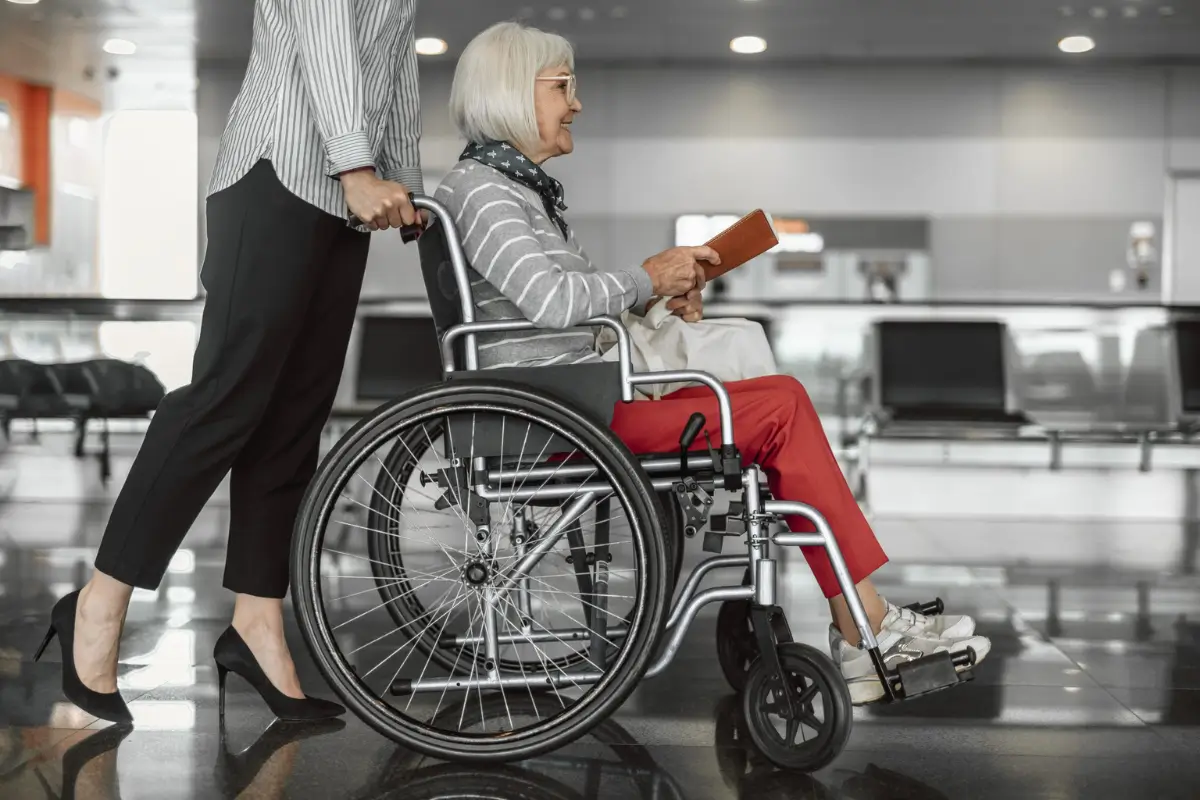
Vietnam’s aviation infrastructure handles millions of passengers annually, with the bulk of international traffic flowing through three major hubs: Tan Son Nhat International Airport (SGN) in Ho Chi Minh City, Noi Bai International Airport (HAN) in Hanoi, and Da Nang International Airport (DAD) in Central Vietnam. Across all these facilities, services for Passengers with Reduced Mobility (PRM) have become highly standardized to meet global aviation requirements.
When you request assistance, airport ground handlers do not just write “needs wheelchair” on your ticket. They use specific international codes to ensure they dispatch the exact type of equipment and personnel required for your mobility level. Understanding these codes is your first step to a flawless journey:
- WCHR (Wheelchair Ramp): You can walk up and down aircraft stairs and move around the cabin, but you require a wheelchair to cover the long distances between the terminal entrance, check-in, and the departure gate.
- WCHS (Wheelchair Steps): You cannot climb or descend stairs, but you can make your own way to your seat once inside the cabin. This code alerts the ground crew in Vietnam that they will need to deploy a specialized lifting vehicle (an ambulift) if the plane is parked on the tarmac without an airbridge.
- WCHC (Wheelchair Cabin Seat): You are completely immobile and require assistance at all times, including being carried to and from your actual cabin seat using a specialized narrow aisle chair.
The best part? Basic wheelchair assistance is completely free of charge. Both the airport authorities and the airlines operating in Vietnam are mandated to provide this service at no extra cost to the passenger. You are never required to pay a fee or a “tip” to secure a standard airport wheelchair or a dedicated pusher to get you through the terminal.
Need immediate assistance coordinating your upcoming arrival? Don’t leave your mobility to chance—reach out to our local concierge team today to ensure your ground transport is perfectly aligned with your airport assistance.
2. How to Book Wheelchair Assistance for Vietnam Flights
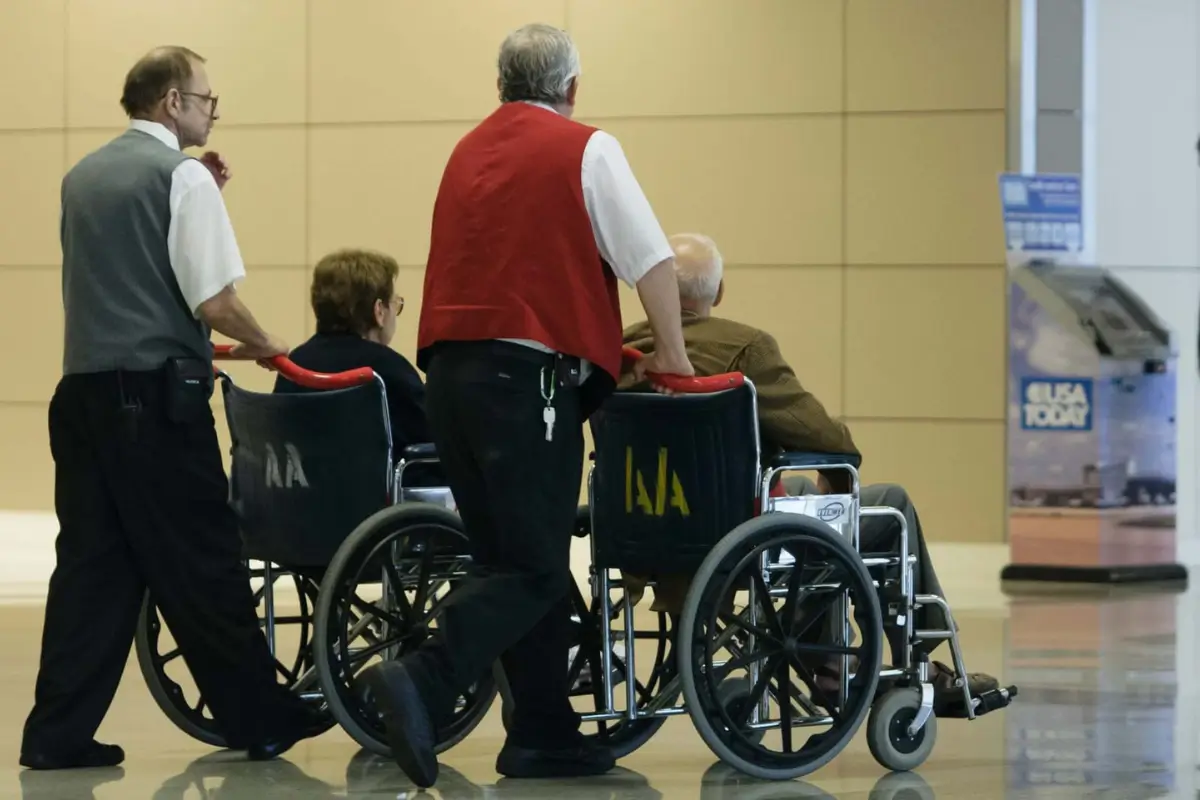
The single biggest mistake travelers make is assuming they can simply ask for a wheelchair upon arriving at a Vietnamese airport. While ground staff will always try to accommodate emergency requests, showing up unannounced often results in agonizing wait times of 45 minutes or more while they scramble to locate an available chair and an attendant.
To guarantee a smooth experience, you must integrate your request into your initial booking process. Here is the foolproof, step-by-step method:
Step 1: Request during ticket purchase. Whether you are booking directly on an airline’s website or through an Online Travel Agency (OTA), look for the “Special Assistance” or “Manage My Booking” section. Select the specific WCH code that matches your physical needs. If the online portal does not offer this option, you must call the airline immediately after receiving your booking reference number.
Step 2: Respect the strict timeline. For flights heading to, from, or within Vietnam, you must request assistance a minimum of 24 to 48 hours in advance. I strongly advise adhering to the 48-hour rule. Vietnamese ground handling companies (like VIAGS or SAGS) finalize their staff rosters and equipment allocations a day in advance. Giving them 48 hours ensures your name is on the VIP manifest for the shift supervisor.
Step 3: The crucial pre-flight confirmation. Do not rely solely on an automated email. Approximately 72 hours before your departure, call the airline’s customer service team. Ask the agent to read back your specific assistance code. This verbal confirmation acts as a fail-safe, ensuring the request successfully migrated from the airline’s reservation system to the local ground handler’s dispatch system in Vietnam.
Consider the case of a recent client traveling from Sydney to Ho Chi Minh City. By confirming her WCHS status 48 hours prior, the ground crew at Tan Son Nhat knew exactly when her flight was landing and had a high-loader vehicle waiting on the tarmac, bypassing a steep set of stairs and saving her immense physical pain.
Have you already booked your flight but forgot to add mobility support? Log into your airline’s “Manage Booking” portal right now to update your itinerary before the 48-hour window closes.
3. Airline-Specific Wheelchair Policies in Vietnam
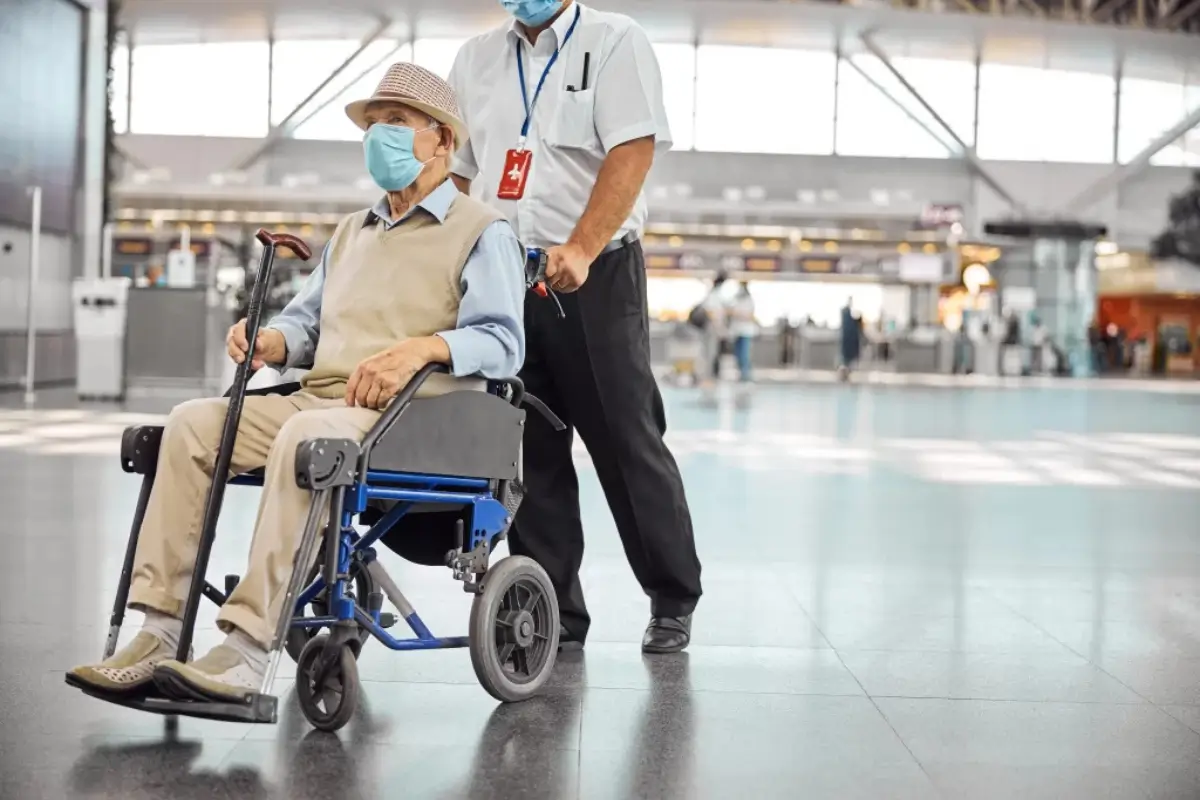
While airport infrastructure is managed by the government, your in-flight and boarding experience is dictated by the specific airline you fly. Policies vary wildly between legacy carriers and budget airlines operating in Vietnam.
Vietnam Airlines: The Premium Standard
As the national flag carrier, Vietnam Airlines offers the most comprehensive PRM services. They provide seamless WCHR, WCHS, and WCHC assistance across their entire network. If you require WCHC (complete immobility) or in-flight medical oxygen, Vietnam Airlines requires a Medical Clearance form (MEDIF) signed by your doctor within 14 days of departure. Their ground staff are highly trained, and they frequently utilize priority boarding protocols to ensure you are comfortably seated before the main cabin boards.
Vietjet Air: Low-Cost Carrier Rules
Vietjet Air is incredibly popular for domestic and regional routes, but as a low-cost carrier, their special assistance policies are much stricter. Vietjet strictly limits the number of PRM passengers per flight due to safety and evacuation regulations. For instance, they may only allow a maximum of two WCHC passengers on a standard Airbus A320. Therefore, booking your assistance weeks in advance is critical—if the quota is full, you will be denied boarding or forced to change flights. Furthermore, Vietjet requires a minimum of 24 hours’ notice for basic wheelchair requests; otherwise, they reserve the right to refuse service.
Bamboo Airways & Domestic Alternatives
Bamboo Airways strikes a balance between legacy service and competitive pricing. Their mobility assistance protocols are highly customer-centric, often mirroring Vietnam Airlines’ standards without the stringent medical paperwork for basic WCHS requests. For smaller regional carriers like Vietravel Airlines or Pacific Airlines, always assume that resources are limited. Contact their customer service channels via phone—rather than email—to secure your mobility equipment, as their digital booking portals can sometimes glitch when processing special service requests.
Not sure which airline fits your mobility needs best? Let us help you select the right carrier for your Vietnam itinerary to guarantee maximum comfort and safety.
4. Navigating the Airport: Departure, Transit, and Arrival
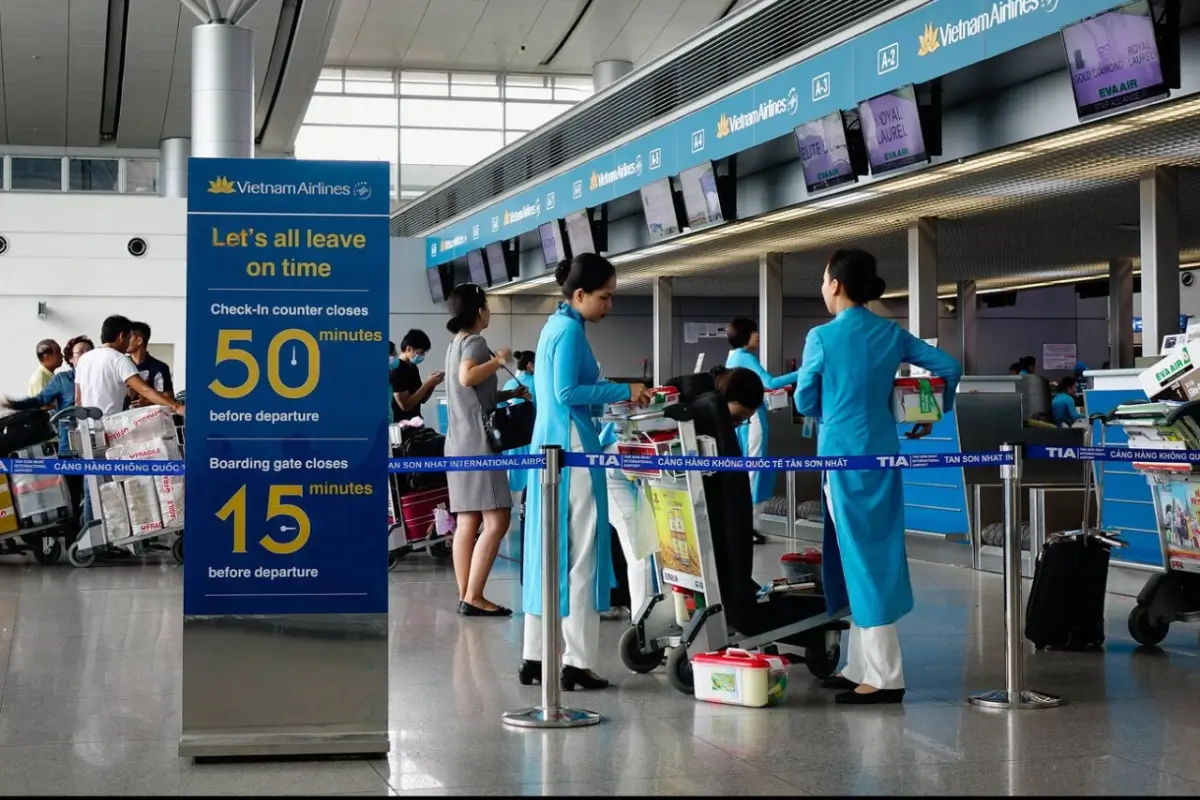
Knowing what to expect physically when you arrive at a Vietnamese airport transforms a stressful ordeal into a predictable, manageable process.
Locating the Meeting Points: When departing from Ho Chi Minh City (SGN), Hanoi (HAN), or Da Nang (DAD), your first stop should be the airline’s dedicated check-in counter. Do not wait at the general airport information desk. Airlines typically have a designated “Priority,” “SkyPriority,” or “Special Assistance” lane. Once you present yourself here, the check-in agent will summon the ground handler with your wheelchair.
The Priority Advantage: Traveling in a wheelchair in Vietnam grants you access to expedited processing. At Tan Son Nhat, where security lines can stretch for hours during peak seasons, your wheelchair attendant will guide you through a dedicated priority security scanner. Similarly, at immigration, you will bypass the massive queues and be taken to the diplomatic or priority passport control desk. This alone can save you over an hour of standing.
Boarding and Disembarking Realities: In 2026, while major terminals have plenty of airbridges (jetways), many domestic flights and budget carrier routes still utilize remote tarmac parking. If your flight is parked remotely, you will not be forced to climb stairs. Instead, the ground crew will deploy an ambulift (high-loader). This is a specialized truck with a cabin that lifts flush with the aircraft door, allowing you to roll directly from the truck into the plane.
Upon arrival in Vietnam, the protocol is universally “last off.” You will remain in your seat until all other passengers have disembarked. This gives the local ground crew the space they need to bring the narrow aisle chair to your row, assist you out of the aircraft, and transfer you to a standard terminal wheelchair waiting at the aircraft door.
5. Bringing Your Own Wheelchair on Flights to Vietnam
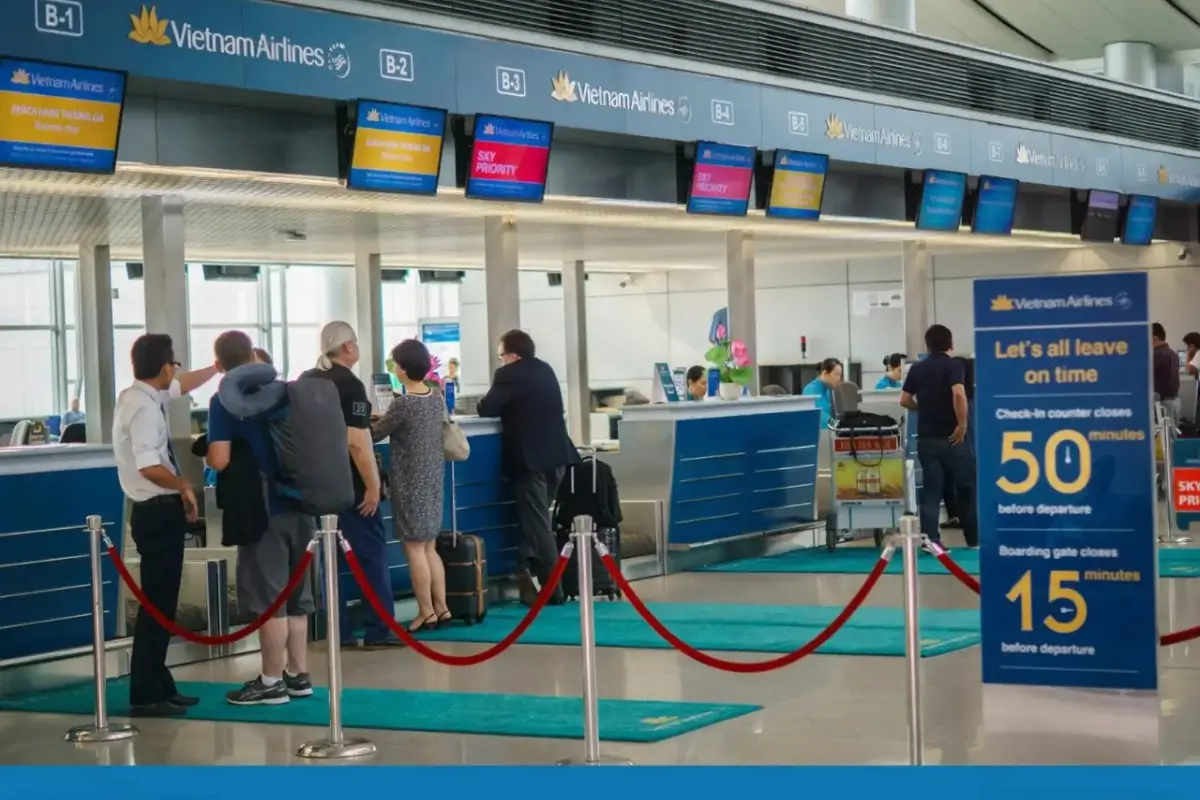
Many travelers prefer the comfort of their own mobility devices. Bringing your personal wheelchair to Vietnam is entirely doable, provided you navigate the strict aviation safety regulations regarding cargo and batteries.
Manual Wheelchairs: If you use a manual, collapsible wheelchair, you can typically use it all the way to the boarding gate. Once at the gate, the staff will tag it and place it in the aircraft’s cargo hold. Upon landing in Vietnam, you can request that it be returned to you at the aircraft door (gate delivery) rather than at the baggage carousel. Always ensure any removable parts, like custom cushions or side guards, are taken into the cabin with you to prevent loss.
Electric and Battery-Powered Wheelchairs: This is where regulations become incredibly strict. Vietnamese aviation authorities strictly enforce IATA dangerous goods regulations regarding batteries.
- Dry-cell (Non-spillable) batteries: Generally accepted without major issues, but the battery must be securely attached, and the terminals must be insulated to prevent short circuits.
- Lithium-ion batteries: These face heavy scrutiny. The battery must not exceed 300 Watt-hours (Wh). If your device requires two batteries, neither can exceed 160 Wh. You must carry the battery documentation (UN testing certificate) and present it at check-in. In many cases, lithium batteries must be removed from the chair and carried into the passenger cabin.
Preparing for the Cargo Hold: Baggage handlers in Vietnam work quickly, and cargo holds can be rough environments. To prevent damage, tape a laminated sheet of instructions (in both English and Vietnamese, if possible) to your chair, showing how to engage the freewheel mode. Remove the joystick controller—the most easily damaged and expensive part of a power chair—wrap it in bubble wrap, and pack it in your carry-on luggage.
Worried about your expensive power chair getting damaged in transit? Consider renting a high-quality mobility scooter locally upon arrival. Contact us to arrange a rental delivered straight to your hotel in Vietnam.
6. Accessibility Features at Major Vietnamese Terminals
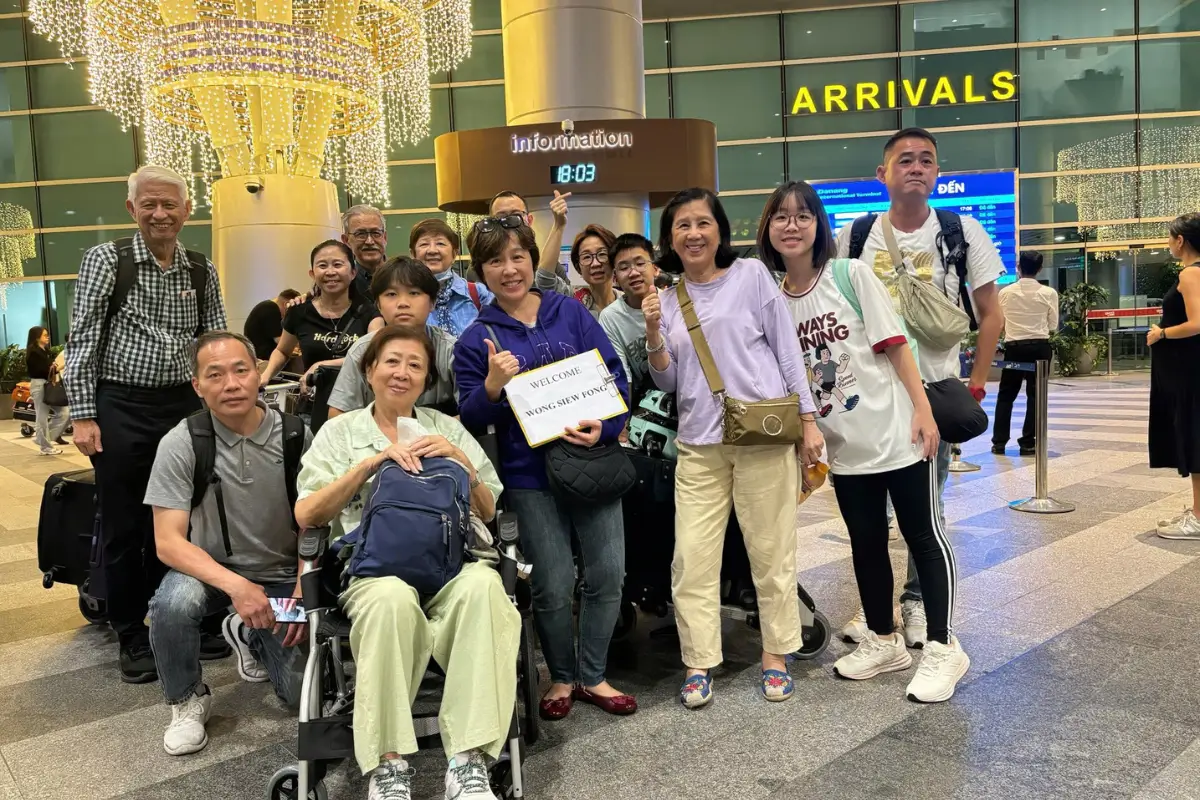
Over the past few years, Vietnam has made significant strides in upgrading its infrastructure to meet international accessibility standards. As of 2026, the physical environment at the major hubs is vastly improved, though some quirks remain.
Physical Accessibility:
At Noi Bai (Hanoi), Terminal 2 (International) is a modern, sprawling facility with wide, smooth corridors, excellent tactile paving for the visually impaired, and gentle ramp gradients.
Da Nang (DAD) is widely considered the most user-friendly airport in the country; its compact size means shorter travel distances, and its modern design incorporates seamless step-free access throughout.
Tan Son Nhat (Ho Chi Minh City) presents a mixed bag. The International Terminal is well-equipped, but the older Domestic Terminal can feel cramped during peak holiday seasons (like Tet), making navigation in a wide power chair slightly challenging due to dense crowds.
Essential Facilities:
Wheelchair-accessible restrooms are available in all terminals, clearly marked with international symbols. They are generally located adjacent to the main restroom blocks. Dedicated elevators are spacious enough for large power chairs and caregivers. In the departure lounges, you will find priority seating areas reserved specifically for PRM travelers, pregnant women, and the elderly, usually located directly next to the boarding gates.
Recent infrastructure improvements in 2026 have also seen the introduction of lower check-in counters at select airline desks, making it easier for wheelchair users to communicate eye-to-level with staff and hand over travel documents without straining.
7. Practical Tips for a Stress-Free Journey
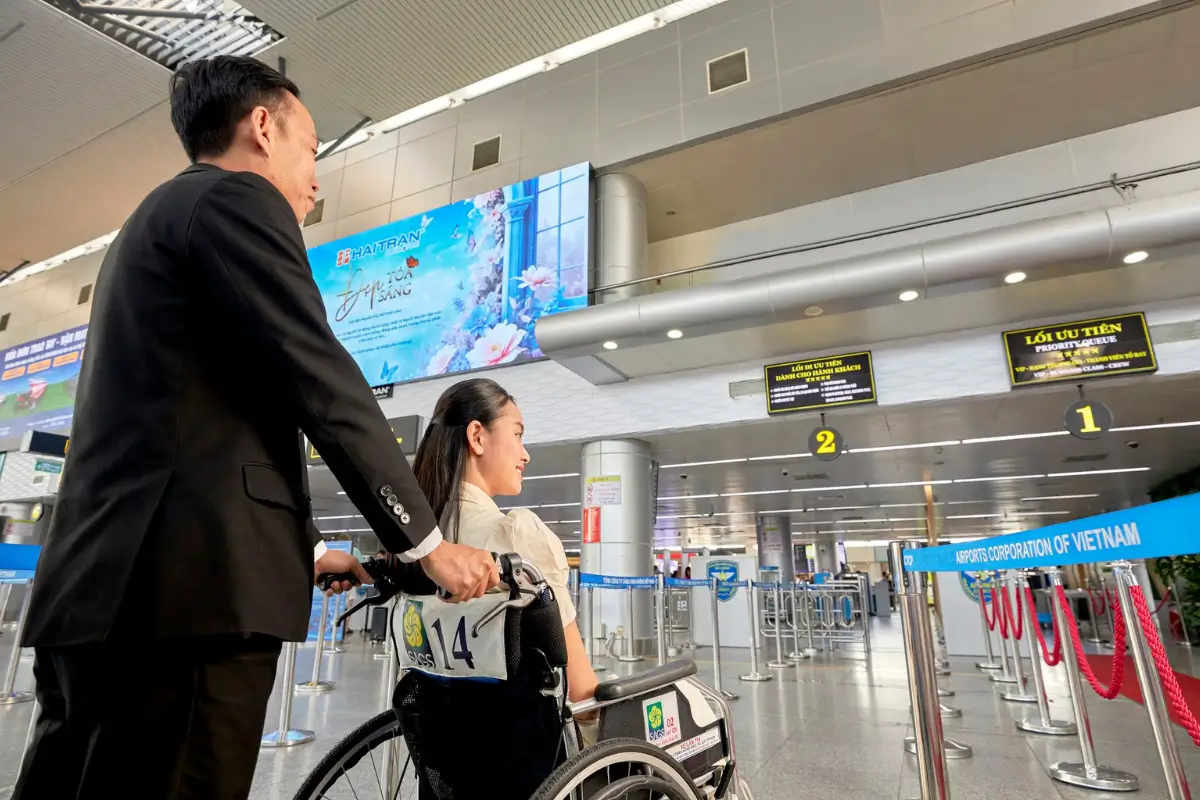
Even with the best airport assistance, personal preparation is the key to a truly seamless travel experience in Vietnam.
Pack a PRM Survival Kit: Your carry-on should be meticulously packed. Never check your essential medications; keep them with you. If you are traveling with a personal wheelchair, pack a small repair kit containing Allen keys, a specialized tire pump, and zip ties. Most importantly, keep a physical folder with your battery specifications, medical clearance forms, and airline confirmation emails readily accessible.
Communication is Key: While airport staff at major hubs speak English, having a few Vietnamese phrases ready can bridge any gaps, especially with ground handlers. Download a translation app, or save these phrases on your phone:
- “Tôi cần xe lăn” (I need a wheelchair)
- “Làm ơn cẩn thận” (Please be careful – useful when they are handling your personal chair)
- “Pin của tôi an toàn” (My battery is safe)
Advice for Caregivers: If you are traveling with a family member who requires assistance, your role is to manage the logistics so they can relax. The airport wheelchair attendant’s responsibility ends at the arrivals curb. Ensure you have pre-booked a wheelchair-accessible vehicle or a spacious SUV for your airport transfer. The heat and humidity in Vietnam can be intense the moment you step out of the terminal; having a driver waiting with cold water and an air-conditioned car ensures a smooth transition from the airport to your accommodation.
Conclusion
Booking wheelchair assistance at Vietnam’s major airports is a straightforward and highly reliable process when you understand the mechanics behind it. By familiarizing yourself with the international WCH codes, adhering to the strict 48-hour advance notice requirements, and knowing exactly what to expect from check-in to the arrivals curb, you eliminate the guesswork from your journey.
Vietnam is a breathtakingly beautiful country, and mobility challenges should never stand in the way of experiencing its vibrant culture, incredible food, and warm hospitality. The airport is just the first step of your adventure, and with the right preparation, it can be a breeze.
Planning your trip to Vietnam? Don’t leave your comfort to the last minute. Contact your airline today to add special assistance to your booking, and reach out to our local concierge team to arrange seamless, accessible ground transportation. Ensure a comfortable, stress-free travel experience from takeoff to touchdown!

Comment (0)