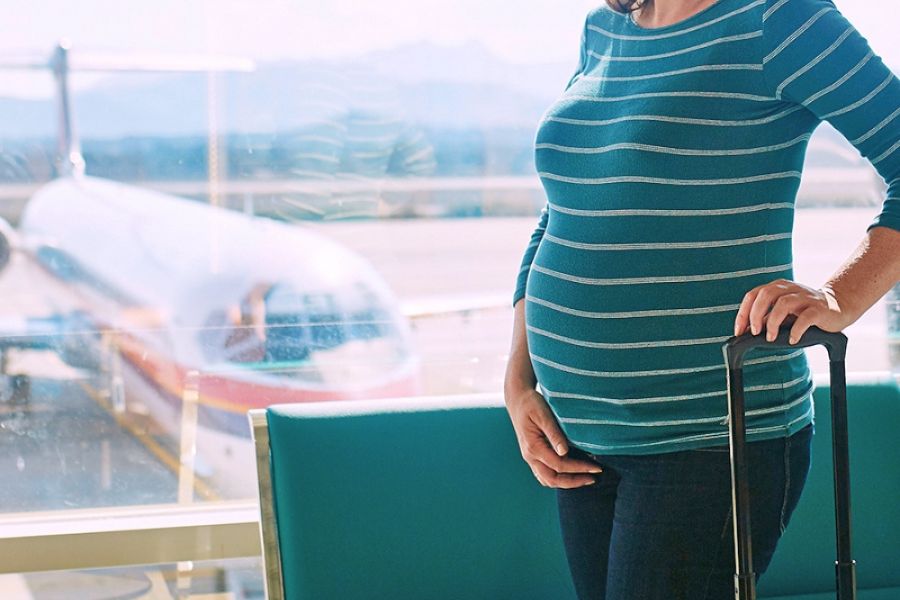
Flying while pregnant is generally safe for many women, but it requires additional planning and awareness of airline policies, airport procedures, and personal health considerations. Understanding travel guidelines before your trip can help you stay comfortable, reduce stress, and make informed decisions throughout your journey. Whether you are planning a short domestic flight or a long-haul international trip, coordinating with your airline and healthcare provider is the best way to ensure a smooth, worry-free air travel experience.
Is Flying While Pregnant Generally Safe?
For individuals experiencing a routine, low-risk pregnancy, commercial air travel is typically considered acceptable up to a certain gestational stage. However, body changes during pregnancy mean that flying demands closer logistical attention than it would otherwise.
General Considerations
The main concerns associated with flying during pregnancy center on the physiological effects of cabin altitude, immobility, and travel-related stress. Commercial cabins are pressurized, which slightly reduces oxygen absorption in the blood. While healthy individuals adapt to this change easily, the primary travel risk for pregnant women is deep vein thrombosis (DVT), a condition where blood clots form in deep veins due to long periods of sitting.
Differences by Trimester
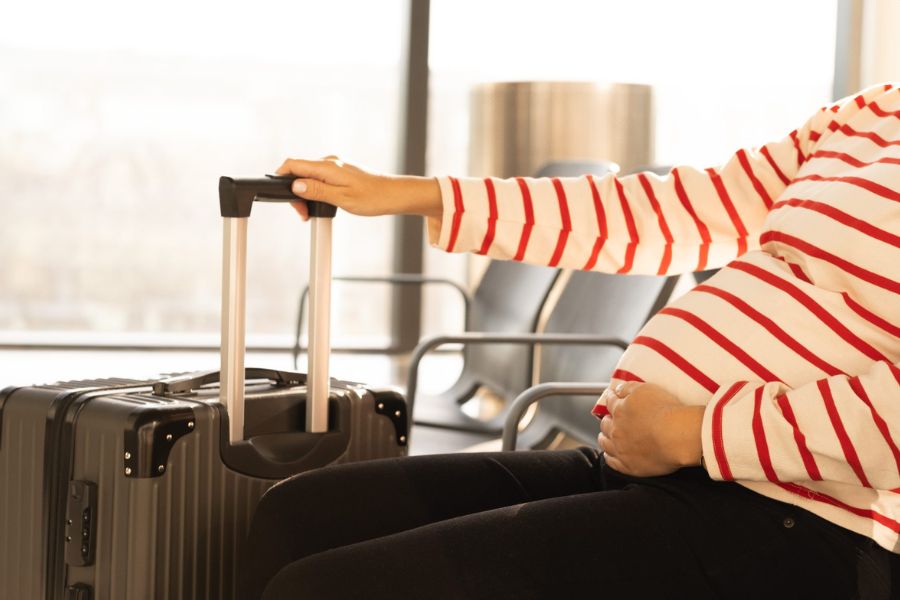
Every stage of pregnancy presents distinct physical experiences that can influence how comfortable or practical air travel will be.
- First Trimester (Weeks 1–13): Fatigue and morning sickness are common during these early weeks. While physical mobility remains high, sudden nausea and scent sensitivities can make crowded airport terminals and airplane cabins uncomfortable.
- Second Trimester (Weeks 14–27): This period is frequently considered the most ideal window for air travel. For many women, early morning sickness has improved, energy levels have returned, and the physical discomforts of late-stage pregnancy have not yet set in.
- Third Trimester (Weeks 28–40): Physical limitations increase during these final weeks. Fatigue, fluid retention in the lower limbs, and general physical discomfort make navigating terminals and sitting in restrictive airline seats much more challenging.
Why Airline Policies Vary
Airlines establish operational travel windows to safeguard passenger health and minimize the logistical complications of a medical event or unexpected labor occurring mid-flight. Because different carriers assess operational liabilities independently, maximum gestational cutoff dates, documentation rules, and medical clearance requirements vary across the aviation industry.
Importance of Medical Consultation
Because every pregnancy is unique, general travel guidelines cannot replace customized medical care. It is essential to consult your obstetrician, midwife, or primary healthcare provider before booking any flights. Your provider can review your medical history, evaluate potential risk factors, and offer personalized advice tailored to your health and well-being.
| Pregnancy Stage | General Travel Considerations |
|---|---|
| First Trimester (Weeks 1–13) |
Focus on managing fatigue, morning sickness, and scent sensitivities. Keep anti-nausea remedies readily accessible in carry-on bags. |
| Second Trimester (Weeks 14–27) |
Often the most comfortable time to travel. Energy levels are higher and physical mobility remains good for navigating terminal layouts. |
| Third Trimester (Weeks 28–36+) |
Increased physical fatigue and fluid retention. Check airline policies closely, as many restrict travel after 35 or 36 weeks. |
Understanding Airline Policies for Pregnant Travelers
Airline regulations regarding pregnancy are tied directly to gestational age. Understanding how these rules apply to each trimester will help you prepare the correct paperwork for your trip.
First Trimester
During the first trimester, most commercial airlines do not enforce specific travel restrictions or require medical documentation. Passengers are generally free to fly without notifying the carrier, provided they feel well enough to travel.
Second Trimester
As you move through the second trimester, standard travel freedom continues with most domestic and international airlines. However, if your belly is visibly showing, some airport gate agents may ask about your due date to ensure you are within compliance limits. Carrying a simple medical note confirming your gestational age can help prevent any clearance questions.
Third Trimester
Airlines enforce much stricter guidelines during the third trimester. For single, uncomplicated pregnancies, many international carriers permit travel up to the end of the 36th week, while others set their cutoff at the 35th or 32nd week. For multiple pregnancies (such as twins or triplets), the travel window usually closes earlier, often around the 32nd week. After these specific cutoffs, airlines may deny boarding unless travel is deemed medically necessary and authorized by the airline’s medical department.

Medical Documentation Requirements
When a medical certificate is required, it must follow specific formatting rules to be accepted at the check-in desk.
- A Statement of Fitness: The document must explicitly state that the passenger is fit to fly on commercial aircraft.
- Gestational Details: It must clearly list the estimated due date, the current gestational age, and whether it is a single or multiple pregnancy.
- Recent Validation: Most airlines require the medical letter to be dated within 7 to 14 days of the scheduled departure flight. Some carriers also require a fresh letter for the return journey if the travel dates span several weeks.
Because airline pregnancy policies are subject to change, travelers should verify exact requirements directly with their airline before booking.
Preparing for Air Travel During Pregnancy
A comfortable, worry-free flight is built on thoughtful preparation before you leave for the airport. Gathering your records and packing intentionally keeps you agile throughout your trip.
Travel Documents
Keep your essential travel paperwork organized in a dedicated folder inside your carry-on bag. This should include your passport or photo ID, flight boarding passes, and any pregnancy-specific medical forms required by your airline.
Medical Records
In addition to a basic fitness-to-fly letter, carry a printed summary of your prenatal records. Having access to your blood type, recent ultrasound findings, allergy history, and your healthcare provider’s direct emergency contact information ensures that foreign medical professionals can provide accurate care if an unexpected situation arises while you are away from home.
Travel Insurance
Review your travel insurance policy to confirm its medical coverage limits. Verify that the policy covers unexpected pregnancy complications, premature birth expenses, and emergency medical evacuation. Be aware that standard travel insurance policies often stop covering pregnancy-related claims after a specific gestational week, typically between weeks 24 and 32.
Choosing Suitable Flights
When organizing your itinerary, prioritize direct, non-stop flights to minimize total transit time. If a connecting flight is necessary, avoid tight layovers. Choose connection windows of at least two hours so you can walk to your next gate calmly, use terminal facilities, and get a nutritious meal without rushing.
Packing Essentials
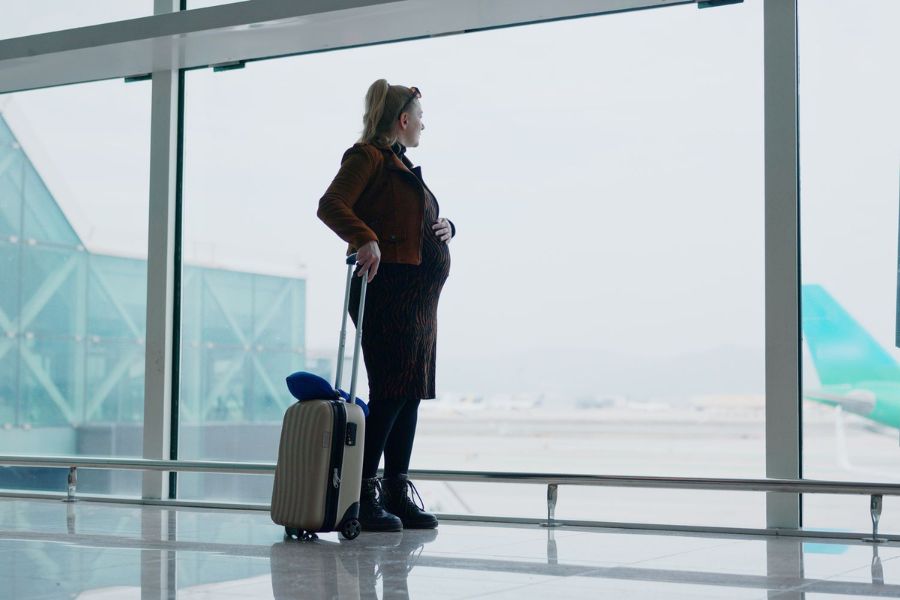
Keep your carry-on luggage light and functional by using a rolling spinner suitcase that requires minimal lifting. Pack healthy snacks, a reusable water bottle, any prescribed prenatal vitamins, a supportive lumbar cushion, and small travel-sized skincare items to refresh your skin during dry flights.
| Document / Item | Purpose | Verification Step | Packing Location |
|---|---|---|---|
| Doctor’s Letter | Airline policy compliance | Confirm it lists due date and fitness status | Main Carry-on Organizer |
| Prenatal Records | Emergency medical reference | Printed copy of recent chart details | Accessible personal bag |
| Compression Socks | Promotes vascular circulation | 15–20 mmHg graduated pressure rating | Put on before arriving at the terminal |
| Reusable Bottle | Maintains vital hydration levels | Empty prior to passing security checks | Side pouch of travel backpack |
| Prenatal Vitamins | Health consistency | Original containers with pharmacy labels | Personal cabin baggage |
Airport Challenges Pregnant Travelers May Face
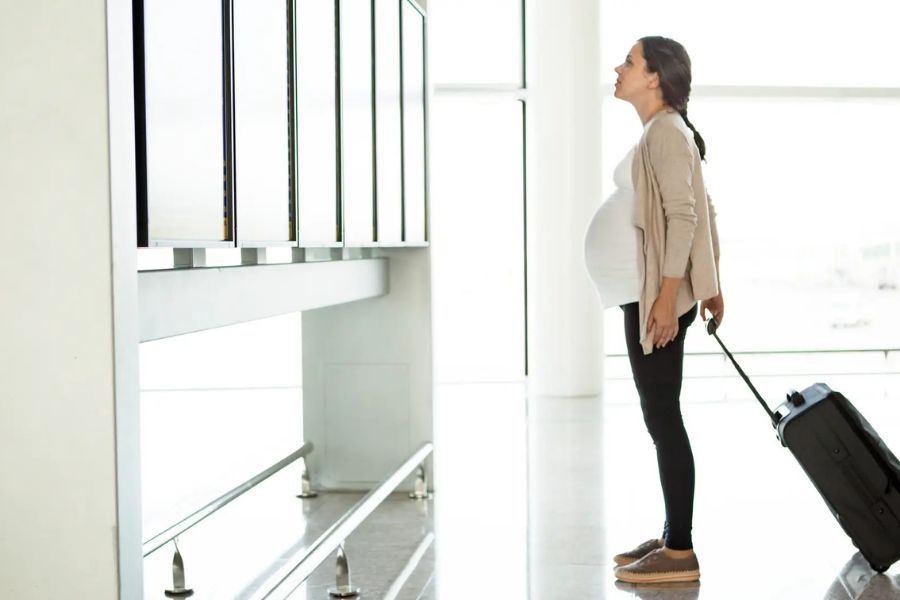
Aviation terminals can be demanding environments. Recognizing common terminal bottlenecks allows you to plan ahead and handle them smoothly.
Long Walking Distances
Modern airports are expansive, often requiring passengers to walk significant distances between check-in desks, security zones, and distant departure gates.
- The Challenge: Walking long stretches can cause physical overexertion, lower back strain, and pelvic discomfort, especially during the later stages of pregnancy.
- Practical Travel Tip: Check your gate assignment on your phone or terminal displays early. Take regular rest breaks on bench seating along your route, or look for terminal shuttle carts to save your energy.
Standing in Security Lines
Passing through central security checkpoints often involves waiting in slow-moving, static lines on hard flooring.
- The Challenge: Prolonged standing can lead to blood pooling in the lower legs, swelling in the feet, and general physical fatigue.
- Practical Travel Tip: Pregnant travelers who prefer additional support during arrival or departure may consider a dịch vụ đón tiễn sân bay to make airport navigation more comfortable and reduce unnecessary physical strain. You can also inform security personnel about your pregnancy, as some airports may offer priority access or seating alternatives if lines are exceptionally long.
Carrying Luggage
Lifting, pulling, and retrieving heavy bags from carousels or overhead bins places sudden stress on your abdominal and back muscles.
- The Challenge: Your center of gravity shifts during pregnancy, increasing the risk of muscle strain or a loss of balance when handling heavy bags.
- Practical Travel Tip: Use rolling luggage that glides easily beside you. Do not hesitate to ask airport porters, airline staff, or fellow passengers for assistance when lifting bags onto counters or out of overhead compartments.
Flight Delays
Weather changes and technical adjustments can sometimes leave passengers waiting in terminal lounges for extended periods.
- The Challenge: Sitting in uncomfortable terminal chairs for hours can cause muscle stiffness, while limited access to fresh food options can disrupt your eating schedule.
- Practical Travel Tip: Walk around the terminal concourse occasionally to maintain healthy circulation. Keep a selection of healthy snacks, such as nuts and whole-grain bars, in your bag so you have nutritious options during unexpected delays.
Fatigue During Travel
The combination of early mornings, changing environments, and sensory stimulation can quickly drain your energy reserves.
- The Challenge: Severe exhaustion can lower your immune defense and cause increased stress or anxiety during your journey.
- Practical Travel Tip: Protect your sleep schedule leading up to your trip, and look for quiet gate areas or premium terminal lounges where you can rest in a calm, peaceful setting before boarding.
Airport Tips for Pregnant Women
A few mindful adjustments to your travel-day routine can make a big difference in reducing physical strain and keeping your airport experience relaxed.
Arrive Early
Add an extra hour to standard airport arrival recommendations. Arriving three hours early for international flights and two hours early for domestic trips gives you a comfortable buffer for check-in, security screening, and restroom visits, removing the need to rush.
Stay Hydrated
Terminal air conditioning and low cabin humidity can accelerate dehydration. Bring an empty, reusable water bottle through security and fill it at a terminal filtration station before your flight. Drink water consistently throughout your time at the airport.
Wear Comfortable Clothing
Choose soft, loose-fitting layers made from breathable fabrics like cotton or linen. Pair them with supportive, well-cushioned slip-on shoes that expand comfortably if your feet swell, and that can be easily slipped off and on during security checks.
Keep Important Documents Accessible
Keep your passport, photo ID, airline medical letters, and prenatal records in an easily accessible pocket of your personal bag. This saves you from having to bend down and search through deep luggage compartments at various airport checkpoints.
Take Breaks When Needed
Do not rush to your departure gate in a single walk. Pace yourself by stopping at seating areas every 10 to 15 minutes to rest, sit down, and refresh your energy before continuing through the terminal.
Plan Transportation in Advance
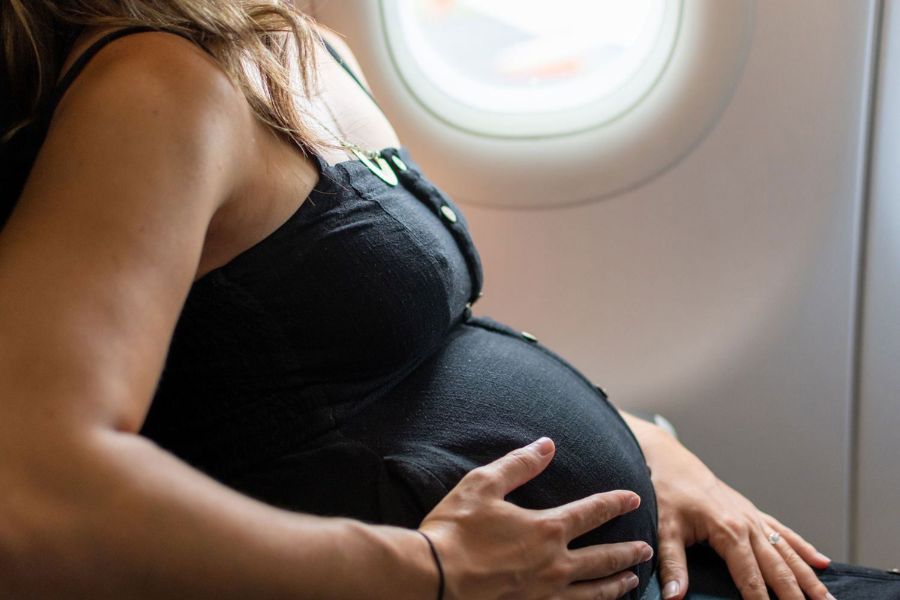
Organize your ground transportation to and from the airport before you leave home. Pre-arranging a hotel transfer or using a reliable ride-hailing app ensures a seamless, comfortable ride straight to your destination without the hassle of waiting in long taxi lines.
| Check | Practical Action Item | Intended Travel Benefit |
|---|---|---|
| Arrive 60 Minutes Ahead of Standard Recommendation | Removes the stress of rushing | |
| Wear Graduated Compression Socks | Minimizes foot and ankle swelling | |
| Request a Middle or Forward Aisle Seat Assignment | Provides easy aisle access and a smoother ride | |
| Fill Reusable Bottle Post-Security | Ensures consistent hydration | |
| Identify Airport Family Restrooms | Offers cleaner, spacious facilities |
How to Stay Comfortable During the Flight
Managing your environment and body movement while in the air is key to a comfortable, relaxed flight.
Choosing Seats
When booking your flight, prioritize an aisle seat. An aisle seat gives you the freedom to stand up, stretch, and use the restroom whenever you need to, without having to slide past neighboring passengers. Seats near the front of the aircraft or directly over the wings also tend to offer a slightly smoother, less bumpy ride during unexpected turbulence.
Stretching and Movement
To support healthy blood circulation and minimize the risk of DVT, make an effort to move regularly throughout the flight. Stand up and walk gently along the cabin aisles for a few minutes every 60 to 90 minutes when the seatbelt sign is turned off. While seated, you can also perform simple foot exercises, such as rotating your ankles and lifting your toes, to keep blood flowing.
Hydration
Drink plenty of water during the flight to combat the dry cabin air. Avoid dehydrating beverages like caffeinated coffee, energy drinks, or black tea, as they can contribute to fluid retention and disrupt your rest.
Compression Socks
Wearing graduated medical compression socks (ideally with a 15–20 mmHg pressure rating) is a simple, effective way to reduce swelling in your lower legs. Put the socks on before you head to the airport to support healthy circulation from the start of your travel day.
Sleep and Rest
Support your body during the flight by bringing a small travel pillow or a rolled-up sweater to place behind your lower back for lumbar support. Fasten your seatbelt low across your lap and under your belly, rather than across your abdomen, so you stay secure and comfortable while resting.
Managing Carry-On Items
Store your heavy carry-on bags in the overhead compartments to maximize your footwell space. Keeping the area under the seat in front of you clear allows you to stretch your legs fully and perform simple foot exercises throughout the flight.
| Common Travel Concern | Practical Tip |
| Deep Vein Thrombosis (DVT) Risk | Wear graduated compression socks and walk along the aircraft cabin aisles for a few minutes every 60 to 90 minutes. |
| Lower Back and Pelvic Strain | Place a small travel pillow or rolled-up jacket behind your lower back to maintain comfortable spinal alignment in your seat. |
| Cabin Air Dehydration | Sip water regularly throughout the flight and avoid dehydrating, caffeinated beverages like coffee or black tea. |
| Seatbelt Placement Discomfort | Fasten the aircraft seatbelt low across your hips and comfortably underneath your pregnancy bump to avoid direct abdominal pressure. |
| Restricted Legroom & Stiffness | Keep your under-seat footwell clear of bags so you have maximum space to stretch your legs and move your feet. |
Common Mistakes Pregnant Travelers Should Avoid
Avoiding these frequent travel oversights can help keep your journey smooth, comfortable, and stress-free.
- Waiting Too Long to Review Airline Policies: Assuming all airlines share the same pregnancy rules can lead to unexpected issues at the gate. Always check your specific carrier’s gestational cutoffs and documentation rules before booking.
- Not Consulting a Healthcare Provider: Skipping a pre-travel medical check-in means missing out on personalized safety advice. Always consult your doctor or midwife to confirm you are clear to fly.
- Overpacking Your Carry-On Bags: Heavy shoulder bags put unnecessary strain on your back and core muscles. Opt for a lightweight, rolling suitcase that glides smoothly beside you.
- Ignoring Consistent Hydration: Relying only on scheduled in-flight beverage service can leave you dehydrated. Bring a large, reusable bottle to fill after security so you always have water on hand.
- Booking Complicated Itineraries: Tight connection windows and multiple layovers can turn a travel day into an exhausting marathon. Choose simple, direct flights whenever possible to keep your journey easy and manageable.
Frequently Asked Questions
- Can pregnant women fly internationally?
Yes, pregnant women can fly internationally, provided their pregnancy is low-risk and they have been cleared for travel by their healthcare provider. It is important to review your airline’s specific gestational cutoff rules and ensure your travel insurance policy covers international medical care for pregnancy. - What documents may airlines require?
Airlines may require an official fitness-to-fly letter from your healthcare provider, particularly if you are traveling during your third trimester. This letter should be written on official letterhead, state your estimated due date, confirm whether it is a single or multiple pregnancy, and explicitly verify that you are fit to travel on commercial aircraft. - Is airport security screening safe during pregnancy?
Yes, standard airport security screening equipment is considered safe during pregnancy. The walk-through metal detectors and advanced imaging technology (body scanners) used at security checkpoints utilize non-ionizing radiation, which does not pose a health risk to you or your baby. If you prefer, you can request a manual pat-down inspection instead. - Which trimester is often considered the most comfortable for travel?
The second trimester (weeks 14 to 27) is widely considered the most comfortable window for air travel. During this phase, early morning sickness has usually improved, energy levels are higher, and the physical discomforts associated with late-stage pregnancy have not yet set in. - How can pregnant travelers reduce fatigue?
Pregnant travelers can minimize fatigue by arriving early to avoid rushing, planning regular rest breaks while walking through terminals, staying well-hydrated, and pre-arranging ground transportation. Choosing direct flights and booking an aisle seat also helps conserve energy. - What should be packed in carry-on luggage?
Your carry-on baggage should include your prenatal medical records, any prescribed vitamins, an official fitness-to-fly letter, a reusable water bottle, healthy snacks, anti-nausea remedies, a supportive travel pillow, and a change of comfortable clothing. - Can pregnant women request airport assistance?
Yes, pregnant women can request mobility or terminal assistance directly through their airline. If you are experiencing physical fatigue, pelvic discomfort, or limited mobility, contact your carrier at least 48 hours before departure to coordinate assistance through the terminal. - What should travelers do before booking a flight?
Before booking a flight, consult your obstetrician or midwife to ensure you are medically cleared for air travel. Once cleared, review the specific pregnancy policies of your chosen airline, check your travel insurance coverage details, and choose an itinerary with direct flights and comfortable seating options.
Conclusion
Flying while pregnant can be a smooth and manageable experience when approached with careful planning and the right information. By understanding how pregnancy impacts your travel day, you can choose the best travel windows, select comfortable seating options, and prepare for typical airport challenges like long walking distances and extended security lines.
Staying aware of your specific airline’s documentation rules and gestational cutoffs ensures a seamless check-in process without unexpected delays at the gate. Prioritizing simple comfort habits-such as wearing compression socks, staying well-hydrated, and moving regularly during your flight—helps protect your physical well-being. Always remember that individual medical advice should come from a healthcare provider, so be sure to consult your doctor or midwife before your trip to ensure a safe, comfortable, and confident journey.

Comment (0)