
Traveling with elderly parents requires careful preparation and adjustments to your usual itinerary to ensure their safety, comfort, and peace of mind. From navigating vast terminal layouts and managing complex medication schedules to mitigating the physical exhaustion of long lines, anticipating these specific needs transforms a potentially stressful journey into a smooth, memorable family experience. This comprehensive guide details actionable strategies, airport navigation tips, and flight comfort solutions designed to support senior passengers throughout their travel day.
Why Traveling with Elderly Parents Requires Extra Planning
Planning a trip with senior family members is fundamentally different than organizing a solo vacation or a trip with young children. As individuals age, their physiological resilience, stamina, and cognitive comfort in high-stimulus environments change, demanding a more proactive approach to trip logistics.
Reduced Mobility
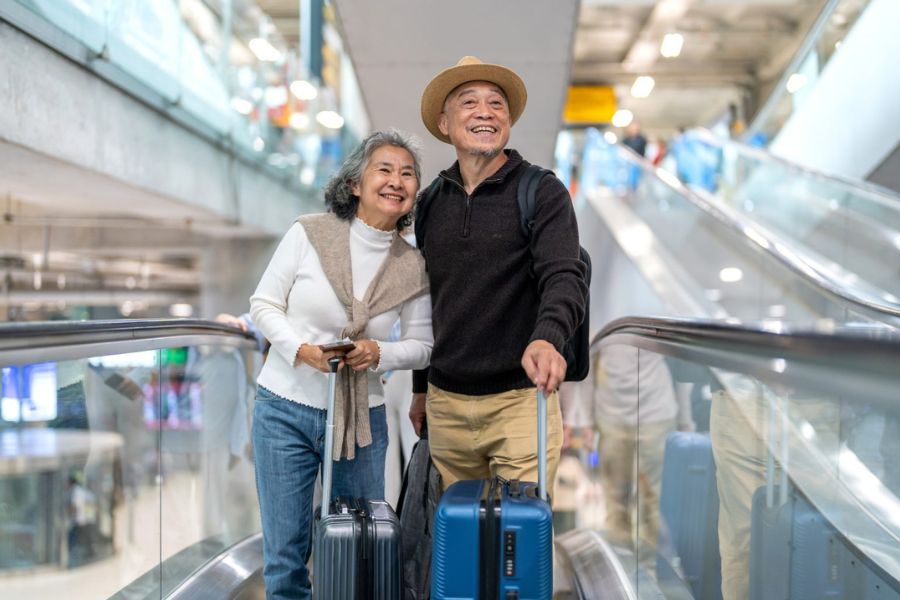
Even seniors who walk independently around their neighborhoods can find the immense scale of modern aviation hubs daunting. Large international airports often feature terminal corridors stretching over a mile from the check-in desk to the departure gate. Conditions like arthritis, joint degeneration, or mild balance issues turn these distances into grueling physical obstacles, increasing the risk of overexertion or accidental falls before boarding even begins.
Medical Considerations
Older adults frequently manage chronic health conditions-such as diabetes, cardiovascular disease, hypertension, or respiratory issues-that require strict, timed routines. Travel inherently disrupts these routines. Changes in time zones, unexpected flight delays, and shifting meal schedules can affect blood sugar levels, blood pressure, and medication efficacy if not managed carefully by the family.
Fatigue During Travel
The physical and mental energy required to withstand a travel day is substantial. Seniors experience fatigue more rapidly than younger adults. Prolonged standing, interrupted sleep patterns, and sensory overload from loud terminal public address systems accelerate physical drain. When fatigue sets in, immune system defenses lower, and spatial awareness decreases, making seniors more vulnerable to disorientation.
Airport Navigation Challenges
Modern airports are sensory-dense environments with flashing digital displays, complex multi-level layouts, and fast-moving crowds. For older individuals, especially those experiencing early-stage cognitive decline or sensory impairments like reduced vision or hearing, deciphering gate changes, finding elevators, and understanding security instructions can induce severe situational anxiety.
Stress Caused by Long Waiting Times
Standing stationary in slow-moving queues at check-in desks, security checkpoints, and immigration counters puts significant stress on an aging body. It causes fluid retention in the lower limbs, aggravates lower back pain, and induces mental anxiety regarding missing the flight, making prolonged bottlenecks one of the biggest psychological hurdles for elderly travelers.
Preparing for the Trip Before Leaving Home
A successful journey begins weeks before departure. Gathering correct documentation, coordinating healthcare clearances, and packing with structural intent ensures your family is equipped to handle any unexpected en-route scenarios.
Medical Documents
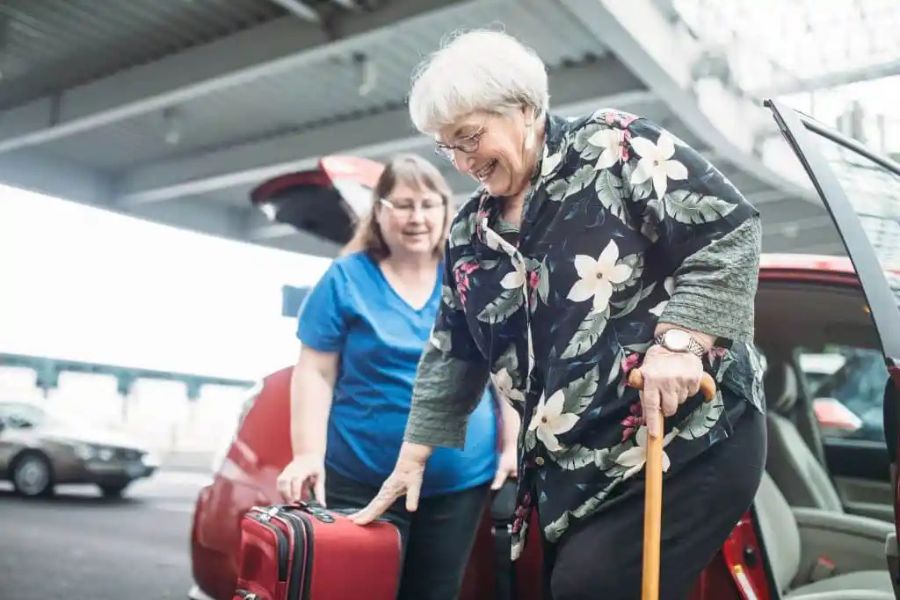
Schedule a pre-travel consultation with your parents’ primary care physician at least four to six weeks prior to your trip. Request a formal, signed letter detailing their chronic medical diagnoses, a complete list of prescribed medications with precise dosages, and an explicit statement confirming they are medically cleared for air travel. Keep this letter inside your primary carry-on folder.
Prescription Medications
Always pack a surplus of vital medications—ideally an extra one to two weeks’ supply—to safeguard against unexpected travel delays or extensions. Keep all medications strictly inside their original, pharmacy-labeled bottles to prevent verification issues at international customs checkpoints. Never place life-sustaining prescriptions inside checked baggage, as luggage can go missing or face extreme temperature changes in cargo holds.
Travel Insurance
Secure a comprehensive international travel insurance policy tailored specifically for older demographics. Ensure the policy explicitly covers pre-existing medical conditions, trip cancellations, trip interruptions, and emergency medical evacuation. Read the fine print to confirm that age-related exclusions do not void critical emergency coverage during your time abroad.
Choosing Suitable Flights
When booking aviation routes, prioritize non-stop, direct flights whenever possible, even if they carry a premium cost. If a layover is unavoidable, avoid tight connection windows. Opt for transit durations of at least two to three hours to allow your parents to decompress, utilize terminal restrooms, and travel between gates at an unhurried, comfortable pace. Avoid early morning departures or red-eye schedules that severely disrupt established sleep patterns.
Packing Essentials
Keep your parents’ carry-on luggage light and highly functional. Utilize a small, wheeled spinner bag that can easily stack on top of a larger suitcase, or a lightweight backpack that keeps their hands completely free. Inside, pack a change of clothes, emergency snacks, specialized orthopedic neck pillows, essential medical devices, and a light jacket to combat the chill of air-conditioned terminal spaces.
| Category | Required Item | Verification Step | Packing Location |
|---|---|---|---|
| Documentation | Doctor’s Letter | Signed, lists current diagnoses & medications | Carry-on Document Folder |
| Medical | Prescriptions | Original pharmacy labels, 7+ day surplus | Personal Cabin Bag |
| Financial/Legal | Travel Insurance Certificate | Confirmed coverage for pre-existing conditions | Digital & Printed Copy |
| Clothing | Compression Socks | Graduated compression, 15–20 mmHg rating | Worn on travel day |
| Comfort | Hydration & Snacks | Empty reusable bottle, protein bars | Easily accessible pouch |
Airport Challenges Elderly Travelers Commonly Face
Anticipating specific friction points inside the airport terminal allows you to formulate a clear strategy before your family encounters them in real time.
Long Walking Distances
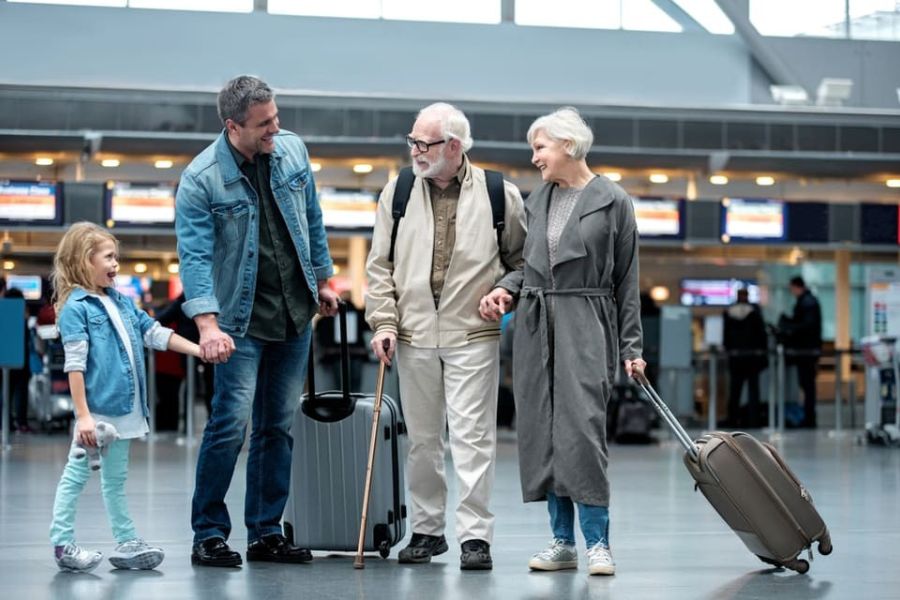
Terminal expansions have made airport floorplans incredibly vast. For an elderly parent, walking from the security checkpoint to a distant gate can feel like a marathon.
- The Issue: Overexertion causes muscle fatigue, joint pain, and shortness of breath.
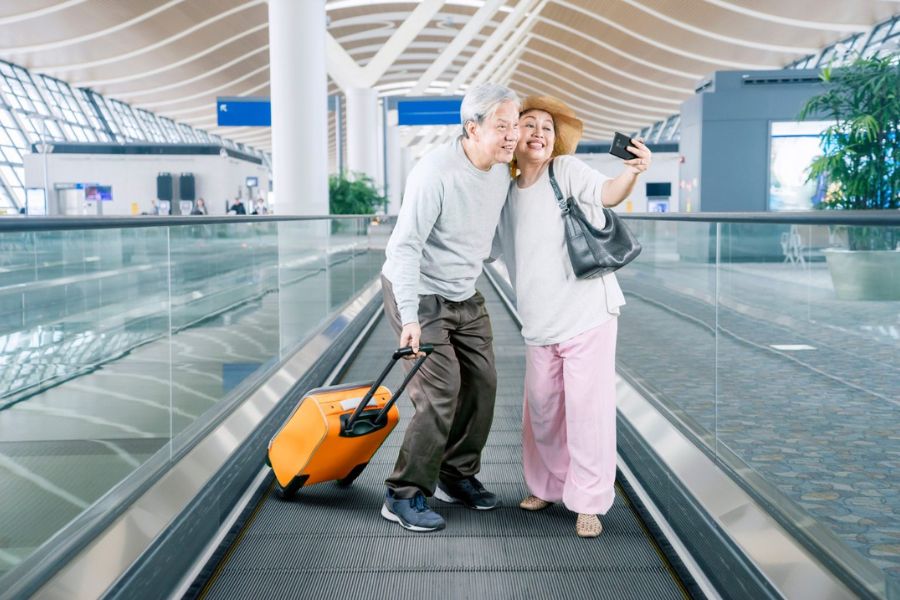
- How to Prepare: Map the airport layout online beforehand. Identify the exact locations of moving walkways, elevators, and transit trains to minimize unexpected walking distances.
Security Screening
The transportation security screening zone is often the most chaotic, fast-paced part of the airport experience.
- The Issue: Requirements to quickly remove shoes, extract laptops, and step into body scanners can confuse or fluster seniors, leading to anxiety or balance issues.
- How to Prepare: Dress your parents in slip-on shoes without complex laces and clothing free of metal buttons or belts. Reassure them that they can take their time, and inform security officers if your parent cannot stand unsupported or has an internal medical device like a pacemaker.
Immigration Queues
International arrival corridors regularly feature slow-moving lines that can trap passengers for significant periods.
- The Issue: Prolonged static standing puts immense strain on an older person’s lower back, knees, and circulatory system.
- How to Prepare: Families traveling with older relatives may also consider Dịch vụ fast track to reduce unnecessary waiting and make airport procedures more manageable for senior passengers. Alternatively, look for specialized lane designations for seniors or disabled passengers, which are available at many international portals.
Baggage Collection
Retrieving heavy luggage from a fast-moving, crowded carousel poses a distinct physical challenge.
- The Issue: Lifting bags weighing 40 to 50 pounds requires sudden, twisting physical strain that can easily cause muscle tears or balance loss for older individuals.
- How to Prepare: Position your parents safely away from the immediate edge of the baggage carousel in a seating area. Have a family member or airport porter handle the physical lifting and loading of bags onto luggage carts.
Flight Delays
Mechanical issues, air traffic congestion, and inclement weather can leave passengers stranded inside terminal lounges for hours.
- The Issue: Delays cause mental distress, disrupt scheduled meal times, and affect medication intervals.
- How to Prepare: Always pack extra food, a reliable water supply, and necessary medication doses inside your carry-on bags so you don’t have to rely on airport restaurant availability.
Practical Airport Tips for Families Traveling with Seniors
Implementing simple, intentional behavioral shifts on your travel day can significantly reduce physical stress and logistics friction for older passengers.
Arrive Early
Add an extra hour to the standard recommended arrival window. For international departures, arriving three and a half to four hours early allows your family to move through check-in, security, and boarding at a calm, deliberate pace, removing the need to rush to the gate.
Request Wheelchair Assistance
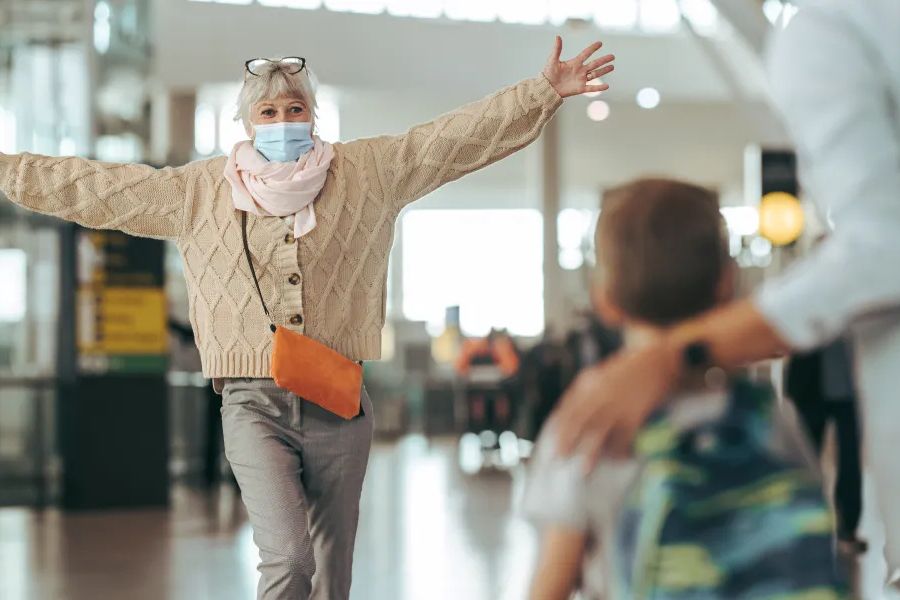
Do not hesitate to leverage airline-provided mobility assistance, even if your parent does not use a wheelchair at home. You can easily request this free service online when booking tickets or by calling your carrier directly at least 48 hours before departure. An airport attendant will meet your parent at the check-in desk with a wheelchair and guide them through security all the way to the aircraft door, preserving their physical stamina for the trip ahead.
Keep Documents Easily Accessible
Avoid fumbling through backpacks at various checkpoints by designating one family member to manage all passports, boarding passes, visa documents, and medical letters. Keep these documents organized inside a dedicated, zippered travel organizer that remains readily accessible throughout the day.
Stay Hydrated
The humidity inside pressurized aircraft cabins and climate-controlled terminals often drops below 20%, accelerating dehydration. Bring an empty, reusable water bottle through security and fill it at a terminal filtration station before boarding. Encourage your parents to sip water continuously, and avoid diuretic beverages like caffeinated coffee, black tea, or alcohol.
Plan Rest Breaks
Incorporate mandatory rest stops into your terminal walk. Stop at seating areas every 10 to 15 minutes to let your parents rest, sit down, stretch their legs, and reset their energy levels before moving on to the next checkpoint.
Choose Comfortable Seating
Look for gate seating sections that feature padded chairs with solid armrests. These armrests provide essential physical leverage, helping seniors with limited core or leg strength stand up more safely and comfortably.
| Stage | Action Item | Targeted Benefit |
|---|---|---|
| ☐ | Confirm Wheelchair Reservation | Eliminates terminal walking fatigue |
| ☐ | Dress in Layered, Loose Clothing | Combats erratic temperature shifts |
| ☐ | Map Out Accessible Restrooms | Avoids high-stress emergency walks |
| ☐ | Consolidate Travel Documents | Eliminates checkpoint confusion |
| ☐ | Prep Emergency Snacks & Water | Maintains consistent glucose levels |
How to Make Long-Haul Flights More Comfortable for Elderly Parents
Long-haul flights present unique physiological challenges for seniors due to extended periods of immobility, low cabin humidity, and atmospheric pressure changes. Managing these variables effectively is key to a comfortable flight.
| Challenge | Recommended Solution |
| Deep Vein Thrombosis (DVT) Risk | Have your parent wear graduated medical compression socks and perform simple hourly ankle extensions and foot rotations while seated. |
| Severe Muscle Stiffness | Select aisle seating to allow your parent to stand up and walk along the aircraft aisles every 60 to 90 minutes when the seatbelt sign is off. |
| Medication Timing Disruption | Keep a dedicated watch or phone set to your home time zone to ensure medications are taken at correct chronological intervals, regardless of changing daylight outside. |
| In-Flight Dehydration | Pre-order low-sodium meals to minimize fluid retention, and ask flight attendants for water regularly rather than waiting for scheduled beverage carts. |
| Poor Sleeping Postures | Bring high-density memory foam neck collars and lumbar support cushions to keep their spine aligned in restrictive economy or premium economy seats. |
Supporting Elderly Parents During Airport Procedures
Navigating through official airport checkpoints requires a balanced combination of patience, proactive communication, and clear spatial direction.
Check-In
When you reach the airline ticket counter, present your group’s documents collectively. Inform the agent right away if you have pre-arranged wheelchair mobility assistance so they can coordinate with the terminal’s ground handling team. Double-check that all checked suitcases have destination tags routed correctly to your final stop, eliminating the need to re-collect bags during intermediate layovers.
Security Screening
As you approach the security lines, ask a supervisor if there is an accessible screening lane available for seniors or passengers with reduced mobility. These dedicated lines are generally less crowded and feature wider paths.
Allow your parent to pass through the metal detector at their own pace. If they use a cane or walker, security personnel will inspect the device manually while providing alternative physical support for your parent.
Immigration
When navigating international border controls, keep your parents standing directly alongside you if local border regulations allow family co-presentation. If independent presentation is mandatory, stand in the queue immediately behind them so you can easily step forward to assist if an official asks for clarification regarding their travel forms, lodging addresses, or return tickets.
Boarding
Take advantage of pre-boarding announcements. Airlines routinely invite passengers traveling with mobility equipment, older adults, and families needing extra time to board the aircraft first. Boarding early gives your parent the opportunity to walk down the jet bridge unhurried, locate their seat row without a line forming behind them, settle in comfortably, and secure overhead locker space for their carry-on bags.
Transit Flights
If your journey requires changing planes, disembark slowly and allow the main rush of passengers to exit first. If you have reserved an airport wheelchair connection, an attendant will meet you at the aircraft door with a chair or buggy to transport your parent directly to their connecting gate, removing the stress of navigating a completely new airport layout under a time limit.
Arrival Procedures
Upon landing at your destination, guide your parents through the arrival hall to a centralized seating area or a quiet café. Let them rest comfortably while you or another family member handle the physical tasks of passing through customs clearance, converting local currency, purchasing local mobile SIM cards, and organizing ground transportation to your hotel.
Common Mistakes Families Make When Traveling with Elderly Parents
Avoiding these frequent planning errors can help keep your trip smooth, safe, and stress-free for everyone involved.
- Scheduling Tight Connections: Booking a layover under 90 minutes leaves no room for flight delays or slow walking speeds. Always build in a generous buffer of at least two to three hours between flights.
- Ignoring Mobility Limitations: Assuming a parent can walk long distances because they are active at home often leads to severe exhaustion at the airport. Be proactive and request airport mobility assistance early.
- Overpacking Carry-On Bags: Heavy shoulder bags strain older joints and increase the risk of balance loss. Use lightweight, wheeled spinner luggage that rolls smoothly with minimal effort.
- Forgetting to Set a Medication Schedule: Shifting across multiple time zones can lead to missed or doubled medication doses. Use a dedicated travel alarm or smartphone app to stick to consistent, time-based intervals.
- Arriving Late at the Airport: Rushing through a crowded terminal creates intense physical and emotional stress for older adults. Always arrive early to keep the travel day calm and relaxed.
Frequently Asked Questions
- How early should elderly passengers arrive at the airport?
Elderly passengers should arrive at least three to three and a half hours prior to scheduled international departures, and two and a half hours for domestic legs. This extra time allows seniors to complete check-in, security screening, and restroom visits at a comfortable pace, preventing the anxiety of rushing to the gate. - Can seniors request wheelchair assistance?
Yes, airlines provide complimentary wheelchair and mobility assistance at all major commercial airports. This service can be requested online during ticket booking or by calling your airline’s customer service team directly at least 48 hours before departure. The service includes an attendant to assist from check-in to the gate. - What medications should elderly travelers carry?
Seniors should carry all essential daily prescription medications, common over-the-counter remedies (like pain relievers, digestive aids, and motion sickness pills), and a detailed doctor’s letter. Always pack these medications in your carry-on luggage inside their original pharmacy containers with matching labels. - Are long-haul flights safe for seniors?
Long-haul flights are generally safe for seniors who are medically cleared by their primary physician. To minimize common flight risks like deep vein thrombosis (DVT) or severe joint stiffness, older passengers should wear graduated compression socks, stay well-hydrated, and stand up to stretch every 60 to 90 minutes. - How can families reduce airport stress for elderly parents?
Families can minimize airport stress by arriving early, arranging for wheelchair assistance, packing light carry-on bags, and handling all travel documents collectively. Planning regular rest breaks, pre-ordering low-sodium meals, and using accessible security lanes also help keep the experience calm and manageable. - What is the best seat for elderly passengers?
An aisle seat located in the forward section of the cabin or near the wings is ideal for elderly passengers. Aisle seats allow seniors to stand up and move around easily without disturbing neighbors, while the middle and forward sections of the aircraft experience less engine noise and physical turbulence. - How much walking is required at airports?
Modern international airport terminals are expansive, often requiring passengers to walk anywhere from a quarter-mile to over a mile to reach their gates. For older individuals with limited stamina, these distances can be exhausting, which is why utilizing terminal carts or wheelchair assistance is highly recommended. - What should seniors pack in carry-on luggage?
Seniors should pack all essential daily medications, a copy of their medical documents, a light jacket or sweater for cold cabins, an orthopedic neck pillow, simple snacks, a reusable water bottle, and a spare change of clothing in case their checked baggage faces unexpected delays.
Conclusion
Successfully traveling with elderly parents comes down to thoughtful preparation, open communication, and a willingness to adapt your pace. By recognizing physical and medical considerations ahead of time, families can systematically address common terminal challenges like long walking distances and stressful security checkpoints. Leveraging helpful airline amenities-such as pre-arranged wheelchair mobility assistance-and practicing simple in-flight wellness habits can significantly reduce physical fatigue and travel-induced anxiety for senior passengers. Navigating the travel day with patience and structure ensures your parents stay safe, comfortable, and energized, allowing the whole family to focus on creating wonderful memories together at your final destination.

Comment (0)