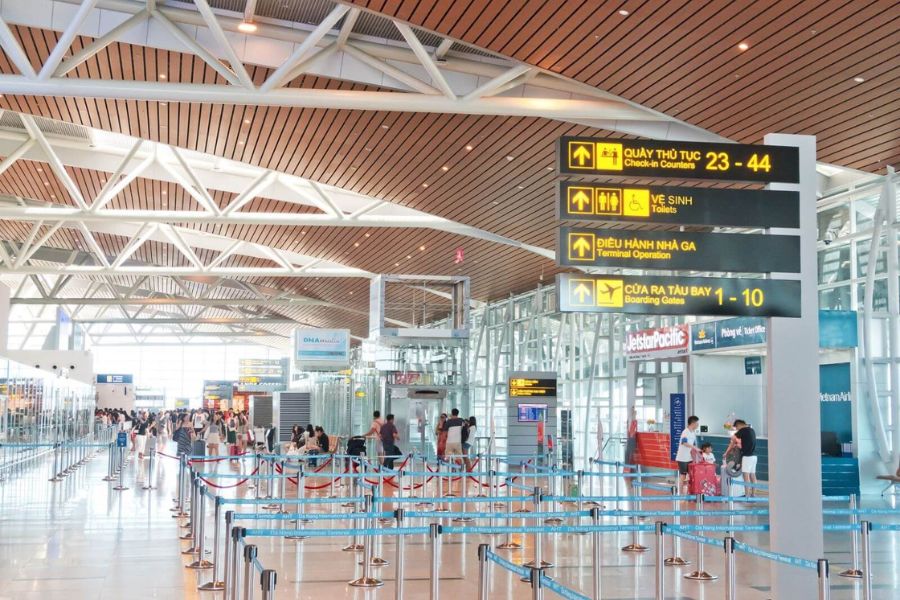
If this is your first time arriving in Vietnam, understanding airport procedures before landing can help you avoid unnecessary stress. This guide explains immigration checks, baggage claim, customs clearance, transportation options, and practical airport tips so you can navigate Vietnamese airports smoothly and confidently from the moment you arrive.
What to Expect When Arriving at a Vietnamese Airport
Stepping off an international flight into a new country can feel overwhelming, especially in a bustling destination like Vietnam. Understanding the structural layout and step-by-step progression of the terminal will give you a clear roadmap of what happens from the moment your plane touches down until you walk out into the fresh air.
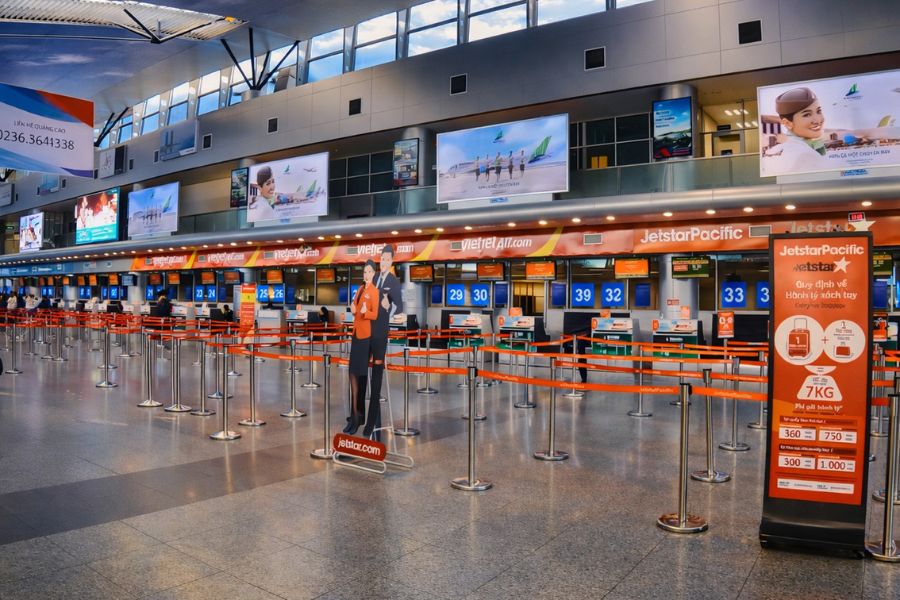
Immigration Control
Upon exiting the aircraft, follow the overhead signage directing you toward “Immigration” or “Passport Control.” In major hubs, this is usually a large, centralized hall filled with parallel queuing lanes. Passengers are divided into separate lines based on their entry requirements: diplomatic passport holders, ASEAN nationals, and general international visitors. It is essential to choose the correct line and have your documents visible in your hand before you reach the front of the queue.
Baggage Claim
Once the immigration officer stamps your passport and grants entry, you will move forward into the baggage claim area. Large digital display screens are positioned above or near the conveyor belts, listing flight numbers alongside their corresponding carousel assignment. Luggage carts are provided free of charge throughout this area. If you are traveling with oversized items, such as golf clubs, surfboards, or baby strollers, look for a designated “Oversized Baggage” zone, as these items rarely arrive on the standard rotating carousel.
Customs Inspection
With your luggage in hand, you must pass through the customs clearance area before entering the public arrival hall. Vietnam utilizes a dual-channel customs system: the Green Channel and the Red Channel. If you have nothing to declare—meaning your goods fall strictly within duty-free allowances and you are not carrying restricted items-you can proceed directly through the Green Channel. All checked and carry-on bags must pass through an X-ray scanner at this checkpoint before you are permitted to exit.
Arrival Hall Procedures
Exiting the customs zone brings you directly into the public arrival hall. This area is highly energetic, filled with transport kiosks, telecommunication booths, currency exchange counters, and crowds of people waiting for arriving passengers. It can be visually overwhelming at first glance. Take a brief moment to orient yourself inside the air-conditioned terminal before stepping outside into the local weather, as re-entry into the terminal building is restricted at several Vietnamese airports due to local security protocols.
Major International Airports in Vietnam
Vietnam has expanded its aviation infrastructure significantly to accommodate the growing influx of global travelers. While the country operates numerous domestic airfields, five primary international gateways handle the vast majority of first time arriving in Vietnam traffic.
| Airport Name & Code | Location | Main Traveler Types | International Connectivity |
|---|---|---|---|
| Noi Bai (HAN) | Hanoi (North) | Business, Culture, Solo, Leisure | Global hubs, Europe, Asia, Australia |
| Tan Son Nhat (SGN) | Ho Chi Minh City (South) | Business, Commercial, Digital Nomads, Tech | High-density global routes, regional hubs |
| Da Nang (DAD) | Da Nang (Central) | Families, Beachgoers, Luxury Travelers | Strong Asian regional connections |
| Cam Ranh (CXR) | Nha Trang (Central Coast) | Vacationers, Resort Stayers | Charter flights, East Asian major cities |
| Phu Quoc (PQC) | Phu Quoc Island (South Coast) | Eco-tourists, Sun Seekers, Families | Selected regional direct flights, visa-exempt arrivals |
Noi Bai International Airport (Hanoi)
Located approximately 30 kilometers north of the capital city, Noi Bai International Airport (HAN) features two distinct terminals: Terminal 1 for domestic flights and Terminal 2 for international flights. Terminal 2 is modern, spacious, and highly organized, acting as the primary entry point for travelers exploring the cultural landscapes of Northern Vietnam, including Ha Long Bay and Sapa.
Tan Son Nhat International Airport (Ho Chi Minh City)
As the busiest aviation hub in the country, Tan Son Nhat International Airport (SGN) is located directly inside the urban footprint of Ho Chi Minh City. Like Hanoi, it separates domestic and international traffic into two separate buildings. Because of its urban location, arriving at Vietnamese airports via SGN introduces you immediately to the high energy of the southern metropolis. It serves as the primary engine for business travelers and those heading toward the Mekong Delta.
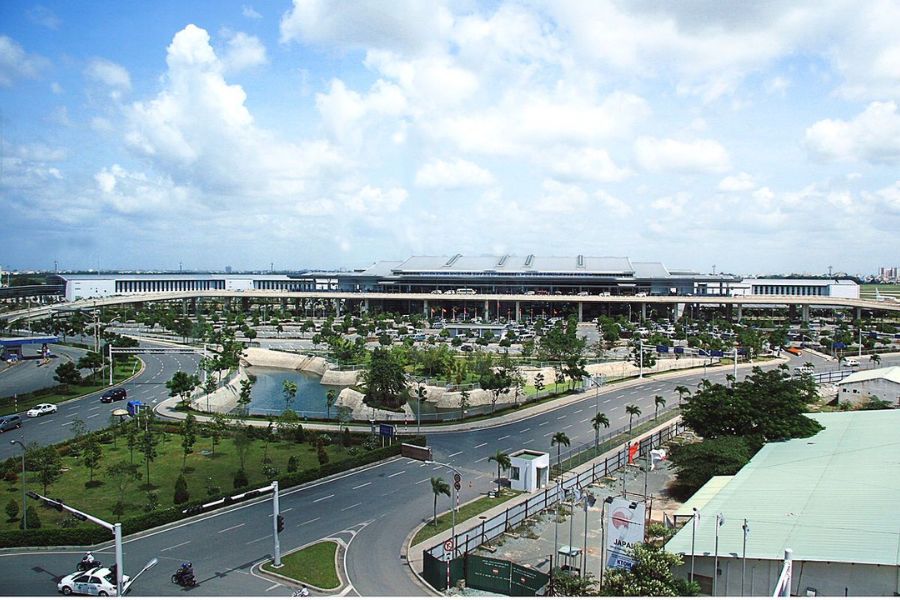
Da Nang International Airport
Serving the central region of the country, Da Nang International Airport (DAD) is widely praised for its efficiency, modern design, and short distance to the city center. It is the ideal airport for first time traveler Vietnam itineraries focusing on the UNESCO World Heritage town of Hoi An, the imperial city of Hue, or the coastal resorts of Da Nang.
Cam Ranh International Airport
Positioned along the scenic south-central coast, Cam Ranh International Airport (CXR) primarily serves the beach destination of Nha Trang. Its international terminal features a striking architectural design inspired by bird’s nests native to the region. It handles a significant volume of holiday charter flights and regional scheduled services.
Phu Quoc International Airport
Situated on a tropical island in the Gulf of Thailand, Phu Quoc International Airport (PQC) offers a unique entry point. The island features a specific visa-exemption policy for international arrivals under certain conditions, making it an attractive destination for standalone island vacations without the standard entry paperwork required for the mainland.
Essential Documents You Should Prepare Before Landing
To ensure a smooth transition through passport control, you must compile your entry paperwork prior to stepping off the aircraft. Having these documents organized prevents delays at the counter and reduces stress.
- Valid Passport: Must have at least 6 months of validity remaining from your date of entry and contain at least two blank pages for entry and exit stamps.
- Printed E-Visa: If you utilized the official electronic visa portal, print at least two physical copies. Digital copies on mobile phones are often not accepted by border officials.
- Return or Onward Ticket: Proof of your intent to depart Vietnam within your permitted stay window is frequently requested before boarding or at immigration.
- Physical Accommodation Address: You must write down the exact name and address of your first hotel, resort, or homestay on your landing information.
- Hotel Confirmation Document: Keep a printed copy of your lodging confirmation handy in case an officer requests verification of your stay.
- Travel Insurance Policy: A physical printout confirming medical coverage, including emergency medical evacuation, is highly recommended.
| Check | Required Item | Format Recommendation |
|---|---|---|
| ☐ | Passport (6+ Months Validity) | Original Physical Document |
| ☐ | Vietnam Approved E-Visa | 2 Printed Paper Copies |
| ☐ | Onward / Return Flight Ticket | Printed Proof |
| ☐ | Hotel Address & Phone Number | Written on Paper Note |
| ☐ | Black or Blue Ink Pen | Pack in Carry-on Bag |
| ☐ | Local Currency / USD Cash | Crisp, Clean Banknotes |
Understanding the Vietnam Immigration Process
The Vietnam immigration process demands attention to detail. When you arrive at the border control zone, verify that you are standing in the correct lane. Avoid using mobile phones, cameras, or recording devices while waiting in line, as immigration authorities enforce strict security policies regarding electronics.
Travelers seeking a smoother airport experience may explore dịch vụ hàng không cao cấp Aviation Plus, which provides premium airport-related support, airport transfers, and travel assistance solutions across Vietnam.
When you reach the immigration counter, present your passport and your printed E-visa together. Stand facing the camera directly, remove any hats, sunglasses, or face masks, and wait quietly for the officer to process your information. The officer will verify your details against their electronic database, scan your passport, and apply an entry stamp indicating your maximum permitted length of stay.
Common Mistakes First-Time Visitors Make
- Presenting Damaged Passports: Water damage, loose pages, or torn covers can cause immediate denial of entry.
- Forgetting Printed Paper Visas: Relying entirely on a smartphone screen to show an E-visa often leads to being sent out of the queue to print it at a transfer desk.
- Incorrect Date Formats on Applications: Mixing up day/month/year formats on digital visa applications can cause mismatch issues with physical passports.
- Failing to Verify the Entry Stamp: Leaving the counter without checking that the stamp date matches your intended travel plan can cause exit issues later.
Immigration officers do not always ask verbal questions if your paperwork is perfectly in order. However, be prepared to answer basic inquiries regarding your length of stay, your travel destinations within the country, or the specific location where you will be sleeping during your first few nights.
Airport Transportation Options After Arrival
Exiting the arrival terminal presents you with multiple options for traveling to your final accommodation. The choice depends on your preference for budget, comfort, and speed.
| Option | Convenience | Cost Level | Best For | Availability |
|---|---|---|---|---|
| Ride-Hailing Apps | High | Moderate | Tech-savvy, Solo, Small Groups | 24/7 via Mobile App |
| Traditional Metered Taxis | Medium | Moderate | Quick departures, Traditionalists | Continuous at Taxi Stands |
| Public Airport Buses | Low | Very Low | Budget Travelers, Backpackers | Scheduled daytime hours |
| Pre-Arranged Transfers | Very High | Higher | Families, Business, Night Arrivals | Continuous based on flight schedule |
Taxi Services
Traditional metered taxis operate out of dedicated ranks located just outside the terminal doors. It is vital to use reputable, well-established national brands such as Vinasun or Mai Linh to guarantee fair metered pricing. Avoid drivers who approach you on foot inside the terminal or away from the official taxi lines, as these unregulated individuals frequently charge inflated flat rates.
Ride-Hailing Apps
Utilizing mobile applications like Grab, Xanh SM (electric vehicles), or Gojek is highly popular among international tourists. These platforms provide fixed, transparent pricing upfront, removing the need for negotiation. Each major airport features designated pickup zones for ride-hailing vehicles, which are clearly marked with overhead signs. Ensure you have working internet access to coordinate with your driver.
Hotel Transfers
Many international resorts, boutique hotels, and business accommodations offer direct airport pickup services. A designated driver will wait for you in the arrival hall holding a placard featuring your name. While this generally carries a higher cost than taking a standard taxi, it eliminates navigation concerns and ensures a seamless transition directly to your room.
Public Transportation
For budget-conscious individuals or minimalist backpackers, public airport buses connect major airports directly to the urban centers. In Hanoi, Bus Number 86 runs a regular, air-conditioned route from Noi Bai straight into the Old Quarter. In Ho Chi Minh City, dedicated bus lines link Tan Son Nhat directly to District 1. These services offer an incredibly affordable way to travel, though they may not be ideal if you have substantial luggage.
Private Airport Transfers
Booking a private car transfer prior to departure through an agency ensures a personal driver and vehicle tailored specifically to your group size. This option provides peace of mind for late-night arrivals or groups traveling with substantial baggage, ensuring an uncompromised door-to-door transit experience.
Common Challenges First-Time Visitors Face
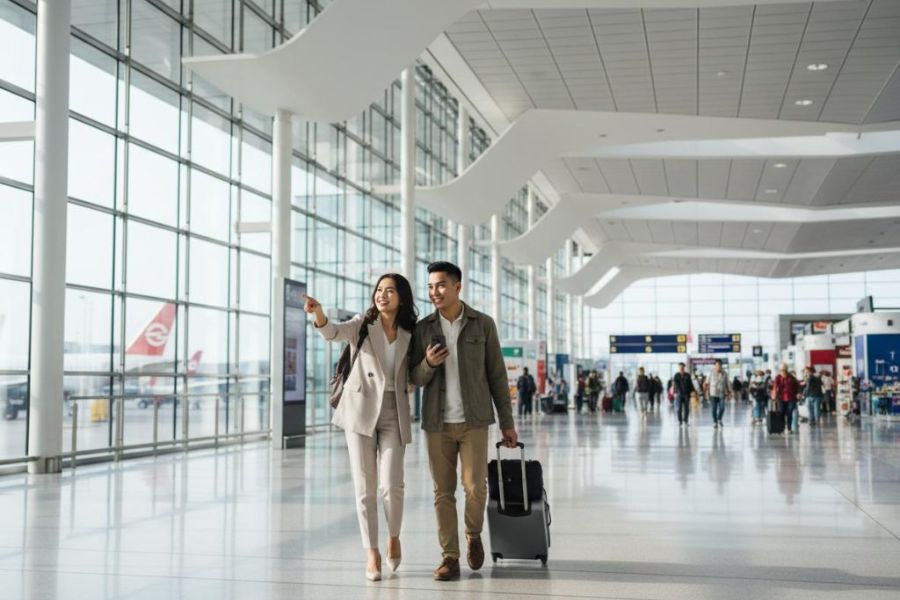
Navigating a foreign airport introduces minor friction points that can disrupt your arrival if you are unprepared. Anticipating these scenario-based issues makes them simple to manage.
Language Barriers
While airport staff, customs officers, and airline personnel generally speak functional English, ground transport staff, cleaners, or utility workers might not. To mitigate this, download an offline English-to-Vietnamese translation application on your phone before departing. Having your destination address printed in physical Vietnamese characters is also immensely helpful.
Currency Exchange
Vietnamese Dong (VND) is the legal tender used across the nation. While card payments are growing in popularity, cash remains indispensable for street food, traditional markets, and small transportation options. Currency exchange booths operate within the arrival halls of all major gateways. Compare rates across a few adjacent counters, or utilize the automated teller machines (ATMs) to pull local cash directly using an international debit card.
Buying SIM Cards
Staying connected is critical for maps and ride-hailing services. Kiosks selling tourist SIM cards populate the entire arrival concourse. Major networks like Viettel, Vinaphone, and Mobifone offer competitive packages packed with high-speed data. Ensure your smartphone is factory unlocked by your domestic carrier before attempting to swap in a local physical SIM or activate a digital eSIM.
Finding Transportation
The outer curb of Vietnamese arrival terminals can appear chaotic, featuring dense crowds, honking horns, and dozens of drivers waving signs. If you find this overwhelming, remain inside the air-conditioned terminal lobby to order your app-based ride or coordinate your meeting point. Only step out onto the curb once your designated driver has confirmed their arrival or you are ready to approach an official taxi line.
Navigating Terminals
Terminal signage uses both Vietnamese and English text alongside universal icons. If you are transferring from an international flight to an internal domestic leg, look closely at your connection tickets. At Noi Bai or Tan Son Nhat, domestic flights require walking or taking a shuttle bus over to a completely different building. Always factor in at least three hours of connection time to clear immigration, collect your bags, and change terminals.

Useful Airport Tips for Different Types of Travelers
Every passenger profile brings distinct requirements to an airport terminal. Tailoring your arrival plan to your specific travel group guarantees an easier transition.
Families with Children
Long flights coupled with standing in passport queues can easily exhaust young travelers. Keep essential snacks, changes of clothing, and entertainment devices easily accessible inside your carry-on luggage. When arriving, ask airport staff members if there is an designated lane for families or small infants, which can help minimize waiting times during peak arrival waves.
Elderly Travelers
The walking distances from arrival gates to immigration counters in major terminals can be considerable. If walking long stretches poses a physical challenge, request a complimentary wheelchair or terminal buggy assistance directly through your airline operator at least 48 hours prior to departure. Ensure all prescription medications remain safely inside your cabin baggage rather than inside your checked luggage.
Business Travelers
For corporate visitors, efficiency is paramount. Traveling with carry-on luggage exclusively allows you to bypass the baggage carousels completely and move straight to passport control. Ensure you carry clean, crisp United States Dollar (USD) or Euro banknotes if you intend to handle any unexpected corporate visa adjustments or business expenses right at the border counters.
Solo Travelers
Traveling alone requires self-reliance and constant vigilance over your personal belongings. Never leave your luggage unattended to visit an ATM or purchase a SIM card. Using a cross-body bag or a secure travel pouch keeps your passport, cash, and smartphone safely fastened to your body, leaving your hands free to handle heavy suitcases or present documents.
Frequently Asked Questions
- What should I do immediately after landing in Vietnam?
Immediately after exiting the aircraft, follow the directional signage toward immigration and passport control. Ensure your physical passport, printed E-visa, and return flight documents are easily accessible in your hand. Complete any missing paperwork before joining the immigration queue to avoid losing your spot. - How long does immigration usually take?
Processing times fluctuate significantly based on your arrival time and terminal congestion. During quiet mid-day windows, clearing passport control can take 15 to 30 minutes. However, during peak arrival hours when multiple wide-body international flights land concurrently, wait times can extend to over an hour. - Can I exchange money at Vietnamese airports?
Yes, currency exchange counters and international ATMs are located throughout the arrival halls of all major international hubs. It is advisable to change a small amount of money at the airport to cover your initial transportation and immediate needs, then look for competitive rates at city center banks or authorized gold shops later. - Are ride-hailing apps available at airports?
Yes, major ride-hailing applications like Grab and Xanh SM operate seamlessly at Vietnam’s primary international gateways. These platforms feature designated pickup points outside the terminals. You will need a functioning internet connection via an airport Wi-Fi network or a local data SIM card to request a vehicle. - What documents should I carry when arriving in Vietnam?
You must present a physical passport valid for at least six months past your arrival date, a printed physical copy of your approved electronic visa (E-visa), and proof of an onward or return flight ticket. Keeping your first hotel’s address written down on paper is also highly recommended. - Which airport is best for international travelers?
The best airport depends entirely on your final destination. For Northern itineraries, Hanoi’s Noi Bai Airport (HAN) is best. For Southern travel and business hubs, choose Ho Chi Minh City’s Tan Son Nhat Airport (SGN). Da Nang Airport (DAD) offers the absolute most efficient entry point for central coastal resorts. - Is English commonly spoken at Vietnamese airports?
Yes, airline staff, immigration officers, customs agents, and information desk workers at major international terminals speak functional English. However, transportation workers, taxi drivers, and utility personnel outside the main terminal might have limited English skills, making translation apps highly useful. - How early should I arrive for departure flights?
For international flights departing out of Vietnam, it is recommended to arrive at the check-in counters exactly three hours prior to your scheduled departure time. This leaves ample time to clear luggage drop-off, navigate outbound security checkpoints, and pass through exit customs without rushing.
Conclusion
Successfully navigating a new country begins with your arrival experience. This Vietnam airport guide has outlined the sequential phases of entering the country, highlighting everything from preparing your physical E-visa printouts to navigating customs channels and selecting reliable local transportation options.
By anticipating common arrival challenges like terminal crowds and potential language gaps, first-time visitors can drastically reduce travel anxiety. Equipping yourself with verified information ensures you transition through immigration efficiently and begin your journey into Vietnam with confidence. Keep your documents organized, remain observant of terminal signage, and enjoy your time exploring this vibrant country.

Comment (0)